Finding a pair of used hearing aids that belonged to a friend or family member may seem like an easy way to save money. Most of us think, if the device still turns on and works just fine, why not use them?
The catch is that hearing aid fitting varies from person to person, depending on their hearing abilities, ear anatomy, comfort, lifestyle, and how the device is programmed.
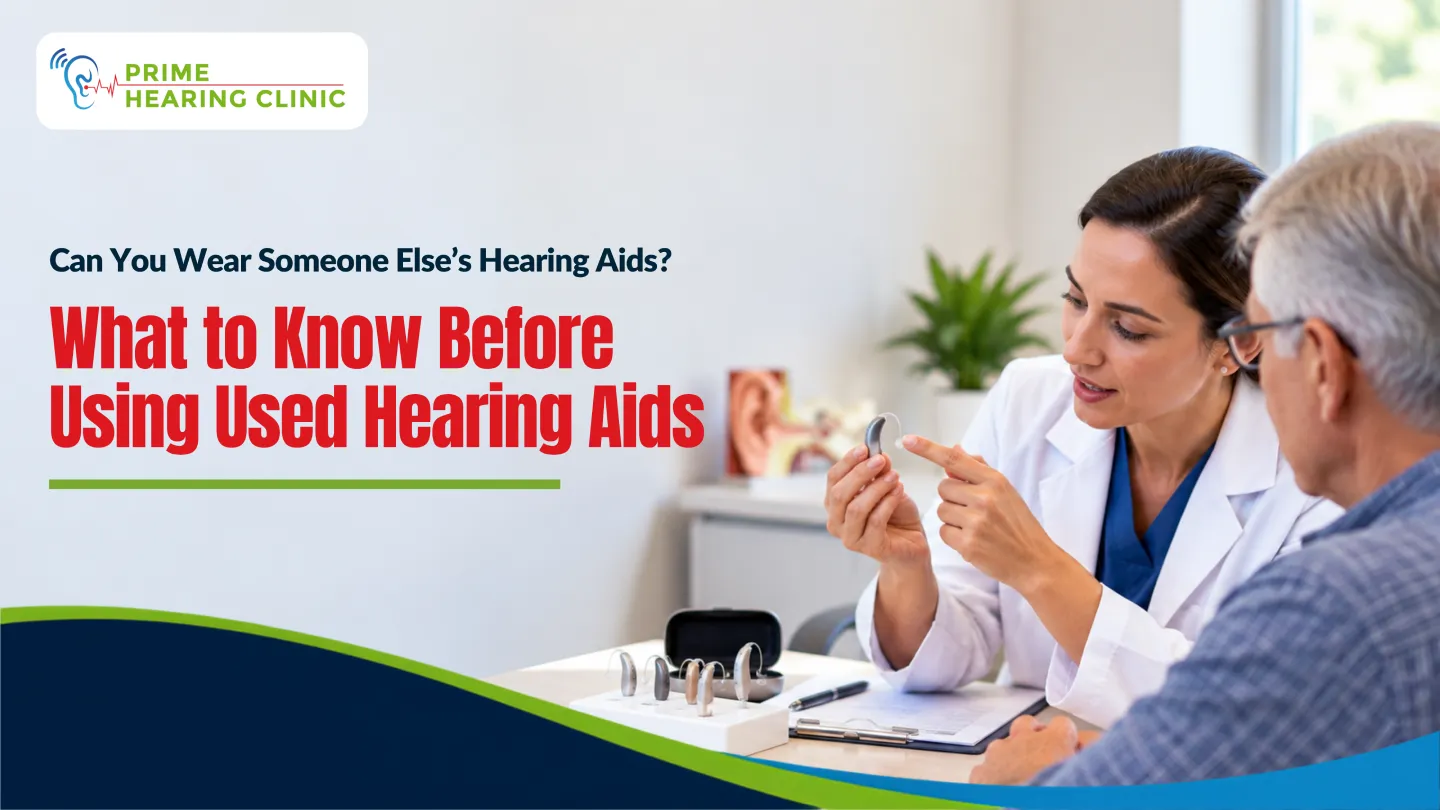
So can you actually wear someone else’s hearing aids? In some situations, previously owned hearing aids may be reusable, but you should not simply put them in your ears and start using them. A hearing aid specialist should determine whether the device is appropriate, ensure it is clean and functioning properly, and adjust it to your hearing needs.
Let’s look at what you should know before using second-hand hearing aids.
If a hearing aid worked well for a previous owner, it does not mean that it will work the same for you. Hearing aids can be programmed to match an individual’s hearing loss, and professional hearing aid adjustments consider factors such as fit, comfort, feedback, and the amount of amplification needed.
A used device may therefore be worth having assessed, but using it exactly as it came from someone else is not the same as having it fitted for you.
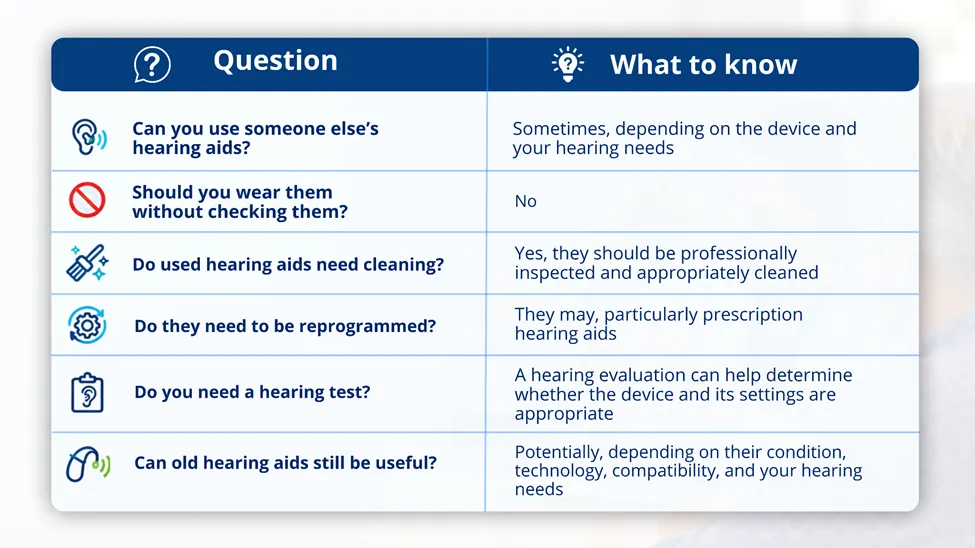
Quick answers:
Not Sure If Your Hearing Aids Are Right for You?
Whether you’re considering used hearing aids or looking for a better fit, a professional assessment can help you understand your options. Schedule an appointment with our hearing care team for personalized guidance, hearing aid fitting, adjustments, and support based on your hearing needs. Ready to hear more comfortably? Book your appointment today.
One of the biggest reasons why you shouldn’t wear someone else’s hearing aids is because of the hearing aid adjustment.
A hearing aid is designed to provide amplification that matches your hearing needs. Two people can have very different hearing loss patterns, even if they talk about the same hearing loss issue.
During a professional fitting, a hearing aid specialist considers the individual’s hearing test results and adjusts the device accordingly.
Depending on the device and the hearing aid clinic, the process may include:
Real-ear measurements, also known as probe microphone measurements, are widely used to verify a hearing aid fitting. They allow the clinician to measure the actual sound reaching the individual’s ear canal and make adjustments based on how the hearing aid is performing in that ear.
If you’re preparing for your first appointment, here’s what to expect during your first hearing aid fitting and how the process helps ensure your device is properly fitted to your needs.
Used hearing aids aren’t automatically bad. However, there are several things worth checking before you rely on one.
A hearing aid that was originally programmed for someone else may provide too little, too much, or otherwise inappropriate amplification for you.
The FDA notes that digital hearing aids have flexible programming that can be matched to different patterns of hearing loss.
That’s why the previous owner’s settings should not be treated as your settings.
A hearing aid that feels comfortable in someone else’s ears may not be the right fit for you. This is especially common for custom hearing aids and earmolds. An appropriate fit can affect comfort, retention, and feedback. Specifically, physical fit and patient comfort are part of the fitting process.
A hearing aid can look completely fine from the outside but may have underlying issues caused by frequent usage, moisture, earwax, or other unknown reasons. Before using used hearing aids, a professional can check their condition and determine whether hearing aid cleaning is needed or replacing them completely would be the right choice.
Hearing aid technology changes with time and new features. An older device may lack the necessary features available in newer models. These can include improved connectivity or updated programming capabilities.
This does not make the older model unfit for use. It simply means that its age and capabilities should be considered before investing money in repairs or relying on it for long-term solutions.
Not every hearing aid is suitable for every type or degree of hearing loss. OTC hearing aids, for example, are intended for adults 18 and older with perceived mild-to-moderate hearing loss, while prescription hearing aids can be used across a broader range of hearing loss.
Second-hand hearing aids can potentially be reused, but they should be properly inspected and cleaned thoroughly before another person wears them. This is important because hearing aids come into close contact with the ear and can easily accumulate moisture, earwax, or skin debris.
Hearing aid specialists advise users to clean hearing aids according to the manufacturer’s instructions. They also advise against using solvents, water, or alcohol on the device because they can damage the delicate electronic components inside the device.
For a used device, a hearing aid practitioner can determine what cleaning, repairing, or replacement of components is suitable rather than relying on DIY cleaning methods.
If someone has given you their old hearing aids, don’t just put them on instantly, thinking they are fit for use.
Have these things checked first:
You should go for a detailed hearing assessment so the professional can determine the type and degree of hearing loss that the device needs to address.
The hearing aid device should be properly inspected for damage and corrosion, worn-out parts, and other problems.
The previous owner’s settings may need to be changed to suit your hearing loss.
The hearing aids should fit comfortably and securely without causing irritation or excessive feedback.
The professional can determine whether the device is suitable for your hearing needs and whether replacement parts, software, accessories, or a compatible charger are available.
If possible, find out how old the hearing aids are, where they were purchased, whether they have been repaired, and whether there is any hearing aid warranty applicable.
This is one of the most common situations that some of us have faced at least once. A parent, grandparent, or spouse may have hearing aids that they no longer use. Before putting them aside or throwing them away, there are several options.
What to do with old hearing aids depends on their condition, age, and whether they can be reused.
You can:
Not every old hearing aid will be suitable for another person, but that doesn’t always mean it has no value.
If you own a pair of used hearing aids, there is no need to assume that they belong in the trash. Rather, there are several things you can do with them:
Start by finding out:
Maybe you can, but don’t assume they will work properly for you simply because they worked for them.
Your level and type of hearing loss may be completely different, and the device may need to be reprogrammed or fitted differently. A hearing aid specialist can determine whether the device is suitable and what adjustments are needed.
This is especially crucial if your hearing has never been evaluated. You should consider a hearing evaluation to identify the type and severity of hearing loss before choosing a hearing aid.
A used hearing aid may seem like the obvious money-saving choice, but price isn’t the only factor.
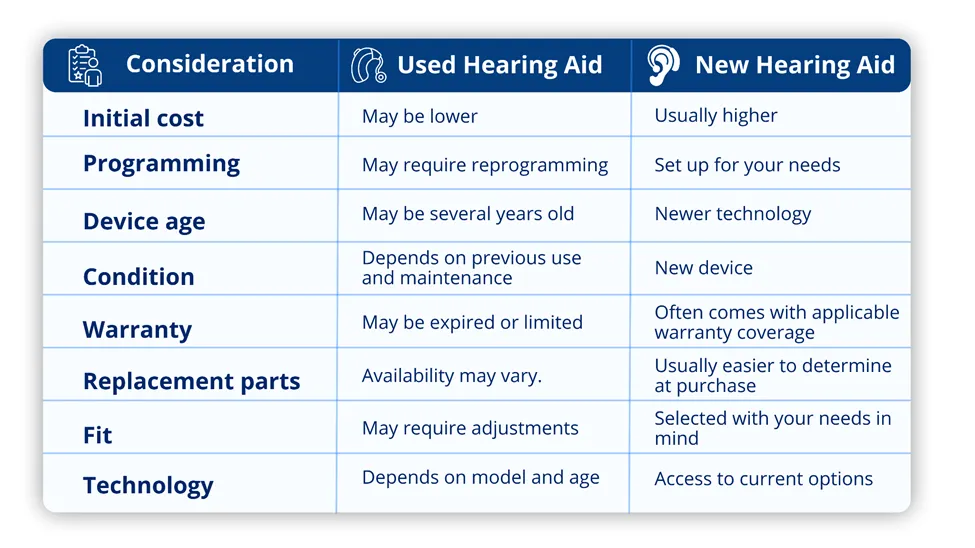
The right choice depends on your hearing needs, the condition and age of the device, and the total cost of getting it ready to use.
You may be able to reuse someone else’s hearing aids, but don’t wear them in the same condition without having them evaluated first. The device must meet your hearing needs, be in suitable working condition, be clean and comfortable, and be properly programmed and fitted.
A used hearing aid can be a useful device rather than something that automatically belongs in a drawer. But the previous owner’s hearing loss, ear shape, settings, and experience with the device don’t tell you whether it will work properly for you.
If you have old or second-hand hearing aids, consider having them checked by a qualified hearing healthcare professional before relying on them.
At Prime Hearing Clinic in Calgary, a hearing evaluation can help determine your current hearing needs, while the team can also assess hearing aids and provide fitting, adjustments, cleaning, and ongoing device support when needed. This gives you a clearer idea of whether an older device is suitable for you or whether another option may be worth considering.
Have an Old Pair of Hearing Aids?
Don’t let an old or second-hand device sit unused or start wearing it without knowing if it’s right for you. Prime Hearing Clinic can evaluate your hearing needs, check your hearing aids, and help ensure they’re properly fitted and adjusted for you.
Assistive Listening Devices Bluetooth hearing aids Custom earmolds Custom earplugs in Calgary hearing-aid practitioners in Calgary hearing aid clinic in Calgary hearing aid clinics in Calgary hearing aid devices Hearing aid practitioners Hearing aid practitioners in Calgary Hearing Aids hearing aids in Calgary hearing care services in Calgary hearing clinic in Calgary hearing clinics in Calgary hearing health clinic in Calgary Hearing Protection Hearing Screening Hearing Test hearing test in Calgary hearing tests in Calgary Hidden Risk of Cotton Swabs in-clinic hearing test Sudden Hearing Loss Wireless Hearing Aids wireless hearing devices
We Speak Your Language

Supporting individuals and families across Alberta with better hearing through expert care, advanced technology, and compassionate service, both in-clinic and in-home.
ਸਾਡਾ ਮਿਸ਼ਨ ਹੈ ਕਿ ਹਰ ਕੋਈ ਵਧੀਆ ਢੰਗ ਨਾਲ ਸੁਣ ਸਕੇ—ਕਿਉਂਕਿ ਸੁਣਨਾ ਜ਼ਿੰਦਗੀ ਨਾਲ ਜੁੜਨ ਦਾ ਸਾਧਨ ਹੈ।
Copyright © 2026 Prime Hearing Clinic. All Rights Reserved.
Powered By Cyber Ace
Our booking services are currently available exclusively in Canada. We’re sorry, but bookings from outside Canada are not currently supported.