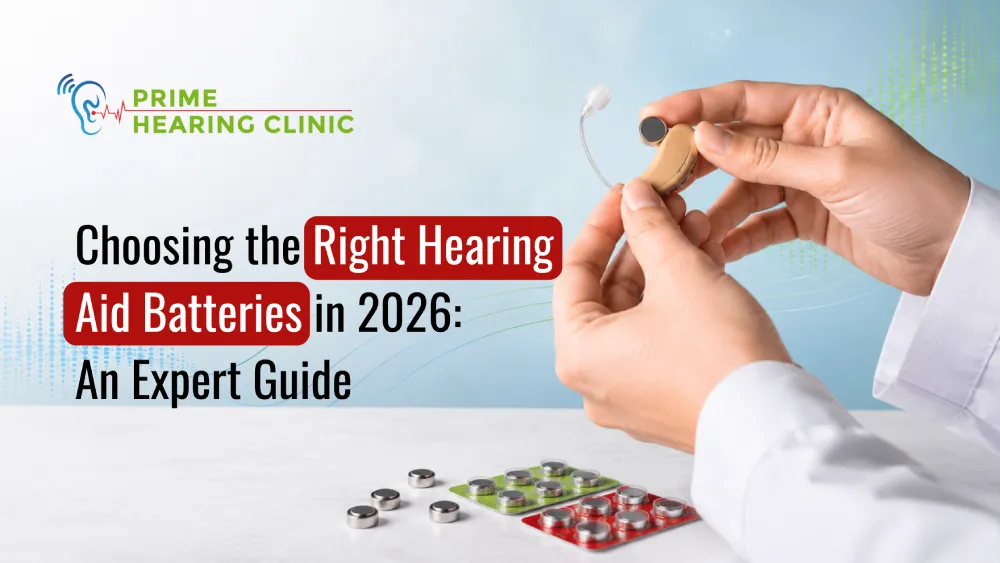
Choosing the Right Hearing Aid Batteries in 2026: An Expert Guide
These days, hearing aids have become more advanced, compact, and feature-rich than ever before. However advanced your hearing aids are, their performance ultimately depends on one essential component: the battery. One of the most common questions that people ask a hearing aid practitioner in Calgary is “Which hearing aid battery is the best?” The answer isn’t always straightforward, as it depends on several factors like the model of your hearing aid, daily usage, and whether you use disposable or rechargeable devices.
This guide shares expert understanding of the best hearing aid batteries in 2026. We’ll also be comparing popular brands, battery lifespan, costs, and practical tips to help you get the most from your hearing aids.
Why Choosing the Right Hearing Aid Battery Matters
Choosing the right hearing aid batteries is essential. These are designed for use with hearing aids and are classified as Class II medical devices in Canada. According to Health Canada, hearing aid batteries are also regulated as medical devices, and it is important to ensure they meet safety and quality requirements.
Using a high-quality battery helps to deliver stable sound quality, reduce unexpected sound loss, and support features that consume power like Bluetooth streaming and noise cancellation.
Are you struggling to choose the right hearing aid battery for your device? Our experienced hearing aid practitioners can help you choose the correct type, recommend trusted brands, and ensure your hearing aids continue to perform at their best.
Book a Consultation
Types of Hearing Aid Batteries
Understanding the two types of hearing aid batteries is essential for picking the right option that suits you best.
There are two main types of batteries:
Disposable Zinc-Air Batteries
Disposable zinc-air batteries are used in hearing aids commonly and cochlear implants. These batteries activate when the protective tab is removed. This lets oxygen enter and start the chemical reaction that generates power.
Advantages of Zinc-Air Batteries
- Affordable and available easily
- Very long shelf life before activation
- Easy to replace
- Available in different sizes for hearing aid models
Considerations
- They require regular replacement
- Performance may vary depending on humidity and temperature
- Must be disposed of responsibly
For best performance, our hearing aid clinic in Calgary recommends waiting around 1 to 2 minutes after removing the tab before inserting the battery into your device. This process allows the battery to fully activate.
Rechargeable Hearing Aid Batteries
In the last few years, rechargeable hearing aids have become increasingly popular due to the convenience they provide. Most modern devices use lithium-ion batteries that recharge overnight with the help of a charging station. A single overnight charge usually provides 18-22 hours of power, including heavy Bluetooth streaming.
Advantages
- No need to purchase disposable batteries
- Easily charges through the night
- Environmentally friendly
- Suitable for individuals with limited skills
Considerations
- Higher cost initially
- Batteries ultimately need professional replacement after a few years
- Daily charging is required
Understanding Hearing Aid Battery Sizes
One of the most common mistakes that people make is purchasing the wrong battery size. Most hearing aid batteries are color-coded to make identification easier.
| Battery Size | Colour Code | Common Hearing Aid Style | Typical Battery Life |
| Size 10 | Yellow | CIC and IIC | 3–7 days |
| Size 312 | Brown | RIC and ITC | 3-10 days |
| Size 13 | Orange | BTE | 6-14 days |
| Size 675 | Blue | Power BTE | 9-20 days |
If you’re unsure which battery your device requires, your hearing aid practitioner can help identify the correct size and recommend trusted battery brands.
Key Features to Look for in Hearing Aids
It’s important to look beyond the price when choosing hearing aids. The right device should be compatible with your hearing needs and comfort preferences. It’s always advised to go for professional advice from a hearing aid clinic in Calgary before deciding for yourself.
1. Sound Quality
Choosing a hearing aid that helps generate a clear, natural sound reproduction is important for hearing better. You should also ensure the device cuts back on the feedback noise for a better experience.
2. Noise Reduction
A good hearing aid device helps reduce excessive background noise and makes conversations easier in noisy environments such as restaurants or social gatherings.
3. Directional Microphones
Directional microphones play an important role in improving speech clarity in environments that are very noisy. Hearing aids equipped with directional microphones improve the signal-to-noise ratio, making the voice of the speaker louder and clearer.
4. Bluetooth Connectivity
Bluetooth hearing aids are becoming popular day by day due to the convenience and tech they offer. These aids can be easily connected to any device with a Bluetooth feature, like TVs, smartphones, and other devices.
5. Customizable Settings
Modern hearing aids come with a feature that lets you personalize how they perform in different situations. This feature lets you adjust sound settings automatically based on the environment you are in.
6. Tinnitus Masking
Tinnitus masking is a great feature available in some hearing aid devices. This helps reduce the perception of a buzzing or ringing sound that some people hear even when no external sound is present.
7. Artificial Intelligence (AI) Features
These days, many modern hearing aids in Calgary come equipped with AI features to improve the listening experience. AI helps recognize sound in real time in different environments and then adjusts the settings to offer a clean and crisp sound.
What’s Leading the Market in 2026
Several renowned brands continue to lead the hearing battery market by offering performance you can trust and compatibility with a wide range of hearing aid models.
Among the trusted names are Power One, Duracell, Energizer, and Rayovac. Each of these is known for offering advanced technology and reliable performance for both basic and advanced hearing aids.
Premium brands offer slightly longer battery life and more consistent power output. The ultimate choice depends on the model of your hearing aid device and personal preferences.
Factors to Consider Before Buying a Hearing Aid
Choosing a hearing aid is an important step toward better hearing and overall quality of life. It is often a misconception that the best hearing aids are available at a high price, as it completely depends on your preferences and hearing needs.
Whether you are buying a hearing aid for the very first time or replacing an older one, understanding your options plays an important role in your hearing health.
1. Get a Professional Hearing Assessment First
Before you head out to purchase a hearing aid, it is important to first get an assessment with a hearing care clinic in Calgary. A professional will identify the underlying problem and then suggest the best solution based on your test results.
2. Understand Your Level of Hearing Loss
Not all hearing aids are designed to support the same degree of hearing loss. Some devices are ideal for mild loss while others support severe or profound hearing loss.
Choosing a hearing aid that matches your hearing profile is important for better clarity and performance in the long run.
3. Choose the Right Hearing Aid Style
Hearing aids are available in several styles. Each offers different levels of comfort and functionality. A hearing aid practitioner can help you explore your options and recommend the most appropriate style based on your hearing loss, ear anatomy, and personal preferences.
4. Look for Essential Features
Hearing aids are more advanced than ever and offer several valuable features. You don’t always need a whole set of features, but picking the ones that match your daily needs and hearing profile is always a benefit.
Hearing Aid Battery Costs & Practical Tips
Estimated Costs
The cost of hearing aid batteries depends on the brand you choose, the size of the battery, and where you purchase them.
Below are typical price ranges in Canada:
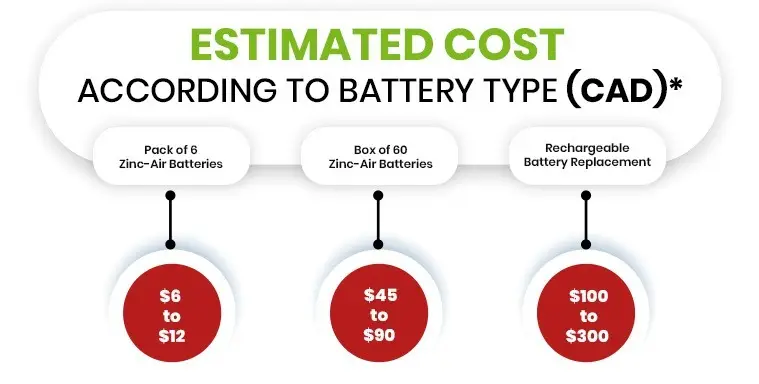
*Prices are approximate and may vary depending on the manufacturer, retailer, and hearing aid model.
Practical Tips for Maximizing Battery Life
Prime Hearing Clinic has put together a few practical tips that help maximize your devices’ battery life in the long run.
- Wait 1–2 minutes after removing the tab from a new zinc-air battery before inserting it into your hearing aid. This allows the battery to activate fully.
- Store batteries in a cool, dry place away from direct sunlight and humidity.
- Open the battery compartment overnight when your hearing aids are not in use to reduce moisture buildup and extend battery life.
- Turn off your hearing aids whenever they are not being used.
- Always use the battery size recommended by the manufacturer to make sure the device performs at its best.
- Avoid carrying loose batteries with keys, coins, or other metal objects, as they can short-circuit.
- Check the expiration date before purchasing batteries, particularly when buying in bulk.
- Keep hearing aid batteries out of reach of children and pets, as button batteries can pose a serious safety hazard if swallowed.
Why a Hearing Test is Important Before Buying Hearing Aids
Hearing loss does not affect everyone the same way. This is one of the biggest reasons why a hearing test in Calgary is essential and is the first step to buying hearing aids.
A hearing test plays an important role in identifying the seriousness and degree of the hearing loss. Based on these evaluations, experts recommend solutions and offer practical tips to help you make the most out of your device. A test identifies different frequencies and volumes of your ability to hear them.
A hearing test also helps reveal if your hearing loss is caused by age-related changes, exposure to loud noise, infections, or medical conditions. In some cases, a hearing loss may be treatable without ever needing hearing aids.
Moreover, many modern hearing aid devices are programmed according to your unique hearing test results. This customization amplifies sounds where you need assistance and preserve the ones you can already hear pretty well.
Additionally, if you insist on purchasing a hearing aid without getting an assessment first it can result in poor performance and unnecessary expenses.
Conclusion
Choosing the right batteries for your hearing aid devices in Calgary goes far beyond comfort. The right batteries help ensure reliable performance and a smooth everyday hearing experience.
Several factors should be considered when selecting batteries for your hearing aids. This is why we recommend seeking guidance from hearing care professionals at Prime Hearing Clinic rather than making a random choice.
Experts will assess your daily wearing routine, lifestyle, and hearing needs before recommending the right battery type, brand, and model that best matches your preferences and hearing aid device.
Have questions about your hearing health or need professional guidance? Our experienced team is here to answer your questions and help you make informed decisions. Get in touch today to speak with one of our experts and receive trusted, personalized support.
Speak to an Expert
Frequently Asked Questions