

With your new hearing aids, there can be an instant flood of new sounds. The hum of the refrigerator, your footsteps, rustling clothes, or even your own voice may suddenly seem louder or different. It can take some time before these sounds start to feel natural again.
But getting used to hearing aids is not just about wearing them every day. Your mind needs time to process sounds it may not have heard clearly for years.
That’s why there is a 30-day adjustment period, where, after the initial hearing aid fitting, you get used to your hearing aid, learn what sounds right, and identify anything that may need adjustment.
This guide will walk you through your adjustment period, what you can expect during your first month, and how to discuss any challenges or concerns with your trusted hearing aid clinic in Calgary.
A hearing aid adjustment period is the time your ears and brain need to get comfortable with hearing sounds through your new device. For many people, this takes around 2 to 4 weeks, although the exact timeline can vary.
Think of this period as a learning phase. After living with hearing loss for some time, you may have become used to missing certain sounds. Once your hearing aids bring those sounds back, your brain suddenly has more information to process.
This is why things like your own voice, background noise, footsteps, or the sound of dishes can seem noticeable at first.
The important thing is not to expect everything to feel perfect on the first day. The first few weeks give you and your hearing professional a chance to understand what is working, what is not, and what may need to change.
Everyone adjusts to hearing aids at their own pace, but the first month is an important period for getting used to amplified sound and identifying any issues that may need attention.
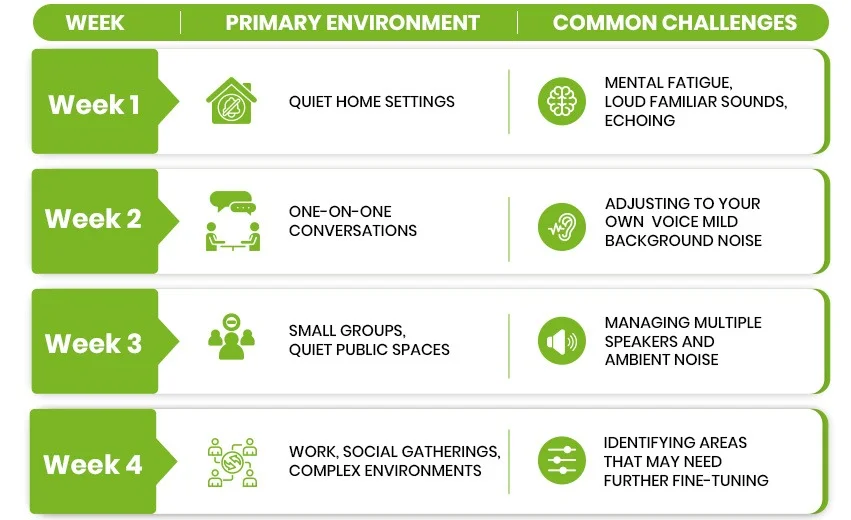
Breaking the adjustment period into weekly stages can give you a better idea of what to expect as you become more comfortable with your hearing aids.
Here’s how each week may look:
The first few days can be the most noticeable because your brain is suddenly receiving more sound than it is used to.
You may suddenly notice your footsteps, dishes clattering, clothing rustling, running water, kitchen appliances, or outdoor sounds that you normally ignore. Your own voice may also sound louder or different.
But this sudden rush of sounds can mentally tire you. So, you need to be careful in your first week.
To get used to your hearing aid, start with familiar, quieter environments. Have conversations at home, listen to television at a comfortable level, and give yourself regular opportunities to hear with the devices.
By the second week, some sounds may begin to feel less unusual. You may notice which sounds are becoming easier and which ones still bother you.
This is a good time to gradually introduce more listening situations.
Try one-on-one conversations outside the home, short walks, small gatherings, or other familiar activities. If television is comfortable, continue using it as a listening exercise. You can also begin spending time in environments with a little more background noise.
Try not to jump straight into crowded places like restaurants or malls.
The goal is to gradually expose yourself to different environments. If a particular environment feels exhausting, step back to an easier setting and try again later.
Around the third week, you begin to notice which sounds you’re comfortable with and which are giving you a hard time.
Perhaps speech sounds clear at home but becomes difficult in a café. Maybe certain high-pitched sounds feel too sharp. Perhaps one ear feels less comfortable than the other, or you notice occasional feedback.
This is where hearing aid fitting and follow-up care become particularly valuable.
Hearing aid fitting is not necessarily the end of the process. Your hearing aid clinic professional can include programming, verification, counseling, orientation, and later adjustments based on your experience.
Before your appointment time, make sure to keep a note of what type of sounds are normal for you and which sounds are giving you difficulties. This way, your audiologist can fine-tune your device and make sure your hearing health in Calgary is good.
During the fourth week, your hearing aid may start to feel like a part of your daily routine.
Your own voice may sound more familiar. Everyday noises may no longer grab your attention as strongly. Conversations may require less effort, and you may be able to wear your devices for longer periods without thinking about them.
That does not mean everyone will be completely adjusted after 30 days. Some people need more time, additional programming changes, or continued practice in challenging listening environments.
The important question is: Are you comfortable wearing your hearing aids? Are conversations easier? Do you understand which situations are still difficult?
Note: These are general guidelines rather than a fixed schedule. Your ideal wearing time can vary depending on your comfort, hearing needs, and your hearing professional’s advice.
You do not need a complicated training program. A few consistent habits can make the adjustment period more manageable.
If the sound is consistently too loud or too soft, speech remains unclear, background noise feels overwhelming, the device causes physical discomfort, feedback keeps happening, or the hearing aid does not feel secure, make sure to contact your trusted hearing aid clinic in Calgary.
An adjustment may involve more than simply turning the volume up or down. Professional fitting can involve programming, checking the physical fit, verifying performance, and discussing how the devices are working in your everyday life
That is why your experience matters. If something consistently feels wrong, do not assume you simply need to “get used to it.”
A new hearing aid can change how you experience familiar places, conversations, and everyday moments. That’s why the early weeks can feel a little unfamiliar, even when everything is working as intended.
Getting used to your hearing aids takes time. You need to wear your hearing aids consistently, give yourself time to adapt, keep notes about anything that does not feel right, and make use of follow-up appointments.
If you have any questions about an issue, you can reach out to Prime Hearing Clinic. Our qualified hearing professional team can help you determine what needs to be adjusted and what is simply part of the learning curve.
In Calgary, the cost of a hearing aid fitting depends on the clinic, the hearing aids you choose, and the services included in the package. In many cases, the initial fittings and programming are included in the total price of the hearing aids rather than charged separately.
The average cost can range from $1200 to $4000 per device, meaning a pair can cost $2800 to $8000 depending on the technology level.
Assistive Listening Devices Bluetooth hearing aids Custom earmolds Custom earplugs in Calgary hearing-aid practitioners in Calgary hearing aid clinic in Calgary hearing aid clinics in Calgary hearing aid devices Hearing aid practitioners Hearing aid practitioners in Calgary Hearing Aids hearing aids in Calgary hearing care services in Calgary hearing clinic in Calgary hearing clinics in Calgary hearing health clinic in Calgary Hearing Protection Hearing Screening Hearing Test hearing test in Calgary hearing tests in Calgary Hidden Risk of Cotton Swabs in-clinic hearing test Wireless Hearing Aids wireless hearing devices
We Speak Your Language

Supporting individuals and families across Alberta with better hearing through expert care, advanced technology, and compassionate service, both in-clinic and in-home.
ਸਾਡਾ ਮਿਸ਼ਨ ਹੈ ਕਿ ਹਰ ਕੋਈ ਵਧੀਆ ਢੰਗ ਨਾਲ ਸੁਣ ਸਕੇ—ਕਿਉਂਕਿ ਸੁਣਨਾ ਜ਼ਿੰਦਗੀ ਨਾਲ ਜੁੜਨ ਦਾ ਸਾਧਨ ਹੈ।
Copyright © 2026 Prime Hearing Clinic. All Rights Reserved.
Powered By Cyber Ace
Our booking services are currently available exclusively in Canada. We’re sorry, but bookings from outside Canada are not currently supported.