When it comes to your hearing, compromise should never be an option. Your hearing is a crucial part of your everyday life, but hearing problems can sometimes develop slowly, and you may not notice any change right away.
In fact, according to the World Health Organization (WHO), in 2026, more than 1 billion young people aged 12–35 are at risk of hearing loss due to unsafe listening practices.
So, if you think there’s a slight change in your hearing, then it may be better to get it checked out. For that, you might need to do a hearing screening or get a hearing test in Calgary. They sound like the same thing, but they are not.
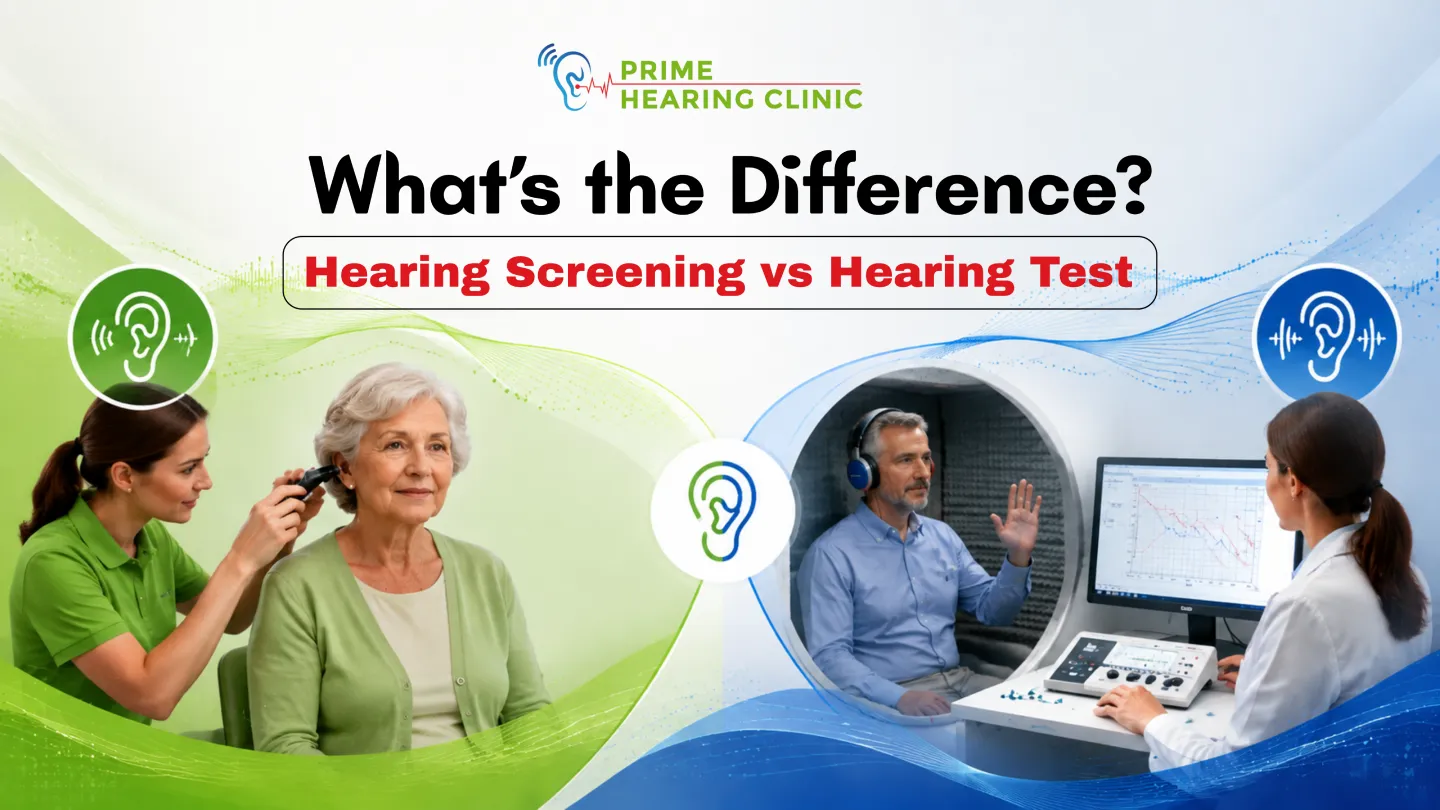
While both are used to check your hearing, they serve different purposes. But what’s the difference between a hearing screening and a hearing test? Let’s take a closer look.
A hearing test is a detailed assessment of your hearing. During a hearing test, a hearing professional checks how well you hear different sounds and, when needed, how well you understand speech.
It may involve several tests, depending on your hearing concerns and individual needs. The results can provide information about your hearing ability and help you identify the type and degree of hearing loss. A comprehensive hearing test may assess:
The results are reviewed by a qualified hearing professional, who can explain what the results mean and discuss any recommended next steps.
Hearing screening is a quick and simple assessment that is used to determine whether you may have hearing loss.
It is not intended to provide a complete diagnosis or detailed information about your hearing. Instead, it helps determine whether you need further hearing evaluation or not. Hearing screening may be recommended for:
The result of a hearing screening is often recorded as:
A hearing screening can be useful as an initial check, particularly if you have not had your hearing assessed before or have started noticing minor changes.
A comprehensive hearing test involves a series of evaluations by an audiologist to check your outer, middle, and inner ear health and your ability to process speech. The exact tests used can depend on your age, symptoms, and hearing concerns.
1. Hearing History
The hearing professional may ask about your hearing, ear health, noise exposure, and any changes you have noticed.
2. Ear Examination
Your ears may be checked using an otoscope. This allows the professional to look inside your ear canal and at your eardrum.
3. Pure-Tone Hearing Test
You will listen to different tones through headphones and earphones. You will respond each time you hear a sound. This helps measure the quietest sounds you can hear at different pitches.
4. Speech Testing
You may be asked to listen to words or speech and repeat what you hear. This helps check how well you understand speech at different listening levels.
5. Other Tests
Other tests may be used when needed. For example, tympanometry checks how your eardrum and middle ear are working. Not everyone needs every type of hearing test.
A hearing screening is usually a simple and quick appointment that takes around 15-30 minutes. It involves a few simple steps to check how well you respond to different sounds. Your appointment at the hearing clinic may involve the following steps:
1. A Quick Check of Your Ears
Depending on the type of screening, the hearing professional may first look inside your ears. This can help in identifying visible issues, such as earwax buildup, that may affect your hearing.
2. Listening to Different Sounds
You may be asked to wear headphones or earphones. The professional will play sounds at different pitches or volumes, and you will respond when you hear them. For some types of screening, a device may play sounds automatically and record your responses.
3. Reviewing the Results
The screening results are then reviewed to see whether your hearing responses are within the expected range. You will generally receive a pass or refer result.
A hearing test is different from routine screening because it provides a detailed assessment of your hearing. How often you need a full hearing test depends on your age, hearing history, and whether you already have hearing loss.
As a general guide:
The right schedule can vary from person to person. A hearing professional can recommend how often you should have your hearing checked based on your hearing results and individual risk factors.
If you’re 50 or older, regular hearing checkups can help you stay aware of any changes in your hearing. Getting your hearing checked regularly can help identify potential concerns early, before they begin to affect your everyday life and well-being. Learn more about why regular hearing checkups matter for older adults.
The recommended frequency can vary based on your age and risk factors. As a general guide:
You may need more frequent screening if you regularly work around loud noise, have a history of hearing problems, or have other factors that may increase your risk of hearing loss.
If you notice a sudden change in hearing or new symptoms such as muffled hearing or ringing in your ears, do not wait for your next routine screening. Have your hearing assessed promptly.
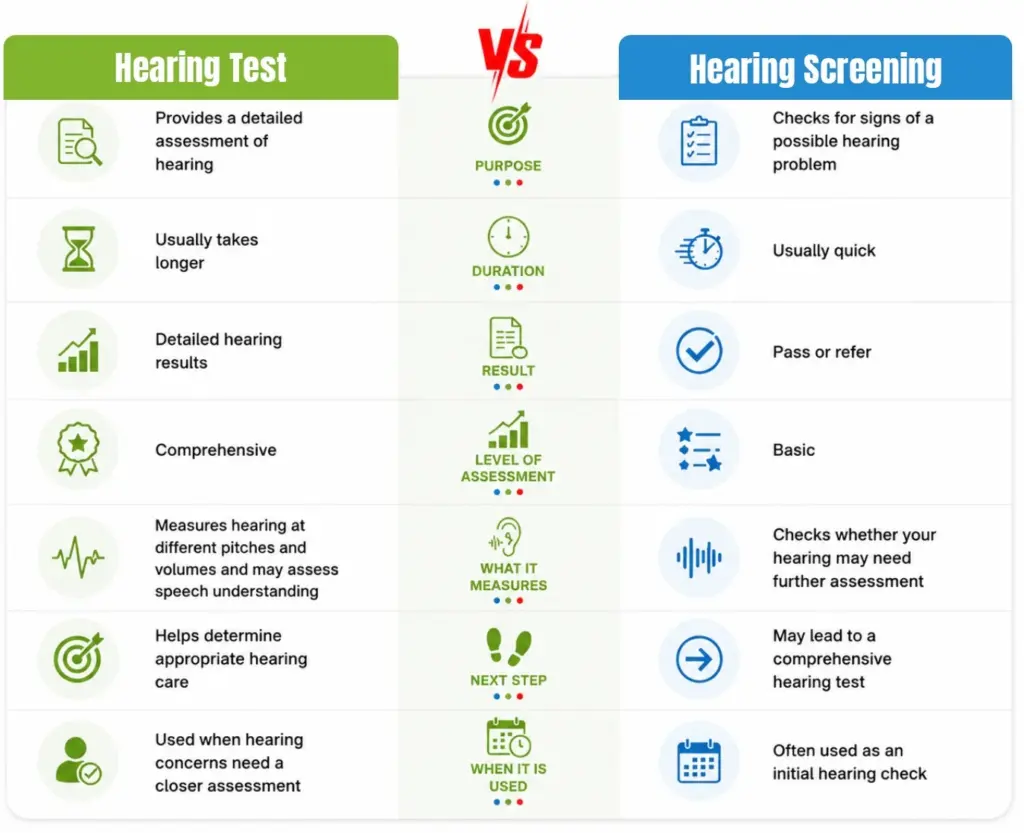
Choosing between a hearing screening and a hearing test mainly depends on whether you are looking for a quick check or a detailed assessment.
You do not have any noticeable hearing problems and simply want to check whether your hearing may need further attention. A screening is a quick way to identify possible concerns and determine whether a more detailed assessment may be needed.
You have already noticed changes in your hearing or are having difficulty understanding speech. A comprehensive hearing test provides more detailed information about your hearing and can help identify the type and degree of hearing loss.
A hearing test may be recommended if you:
If you are looking for a quick initial check, a hearing screening may be the right place to start. And if you are experiencing hearing difficulties or need a detailed evaluation of your hearing, a comprehensive hearing test is more appropriate.
If you are concerned about your hearing, consider speaking with a hearing professional at a hearing clinic in Calgary and ask which type of assessment is right for you.
Knowing the difference between a hearing screening and a hearing test can help you choose the right starting point for your hearing care.
If you are simply looking for an initial check, a screening may be appropriate. If you are experiencing ongoing hearing difficulties or a screening has identified a concern, a comprehensive hearing assessment can provide more information about your hearing.
If you are unsure which option is suitable, a hearing professional can assess your concerns and recommend the next step.
If your hearing screening results fall outside the expected range, it does not necessarily mean that you have permanent hearing loss. This indicates a possible concern, but it does not necessarily mean that you have permanent hearing loss. It usually means that further assessment is recommended.
Yes, a comprehensive hearing assessment can help determine the type and degree of hearing loss. Different tests may be used to understand whether the hearing problem involves the outer or middle ear, inner ear, or other parts of the hearing system.
Assistive Listening Devices Bluetooth hearing aids Custom earmolds Custom earplugs in Calgary hearing-aid practitioners in Calgary hearing aid clinic in Calgary hearing aid clinics in Calgary hearing aid devices Hearing aid practitioners Hearing aid practitioners in Calgary Hearing Aids hearing aids in Calgary hearing care services in Calgary hearing clinic in Calgary hearing clinics in Calgary hearing health clinic in Calgary Hearing Protection Hearing Screening Hearing Test hearing test in Calgary hearing tests in Calgary Hidden Risk of Cotton Swabs in-clinic hearing test Wireless Hearing Aids wireless hearing devices
We Speak Your Language

Supporting individuals and families across Alberta with better hearing through expert care, advanced technology, and compassionate service, both in-clinic and in-home.
ਸਾਡਾ ਮਿਸ਼ਨ ਹੈ ਕਿ ਹਰ ਕੋਈ ਵਧੀਆ ਢੰਗ ਨਾਲ ਸੁਣ ਸਕੇ—ਕਿਉਂਕਿ ਸੁਣਨਾ ਜ਼ਿੰਦਗੀ ਨਾਲ ਜੁੜਨ ਦਾ ਸਾਧਨ ਹੈ।
Copyright © 2026 Prime Hearing Clinic. All Rights Reserved.
Powered By Cyber Ace
Our booking services are currently available exclusively in Canada. We’re sorry, but bookings from outside Canada are not currently supported.