
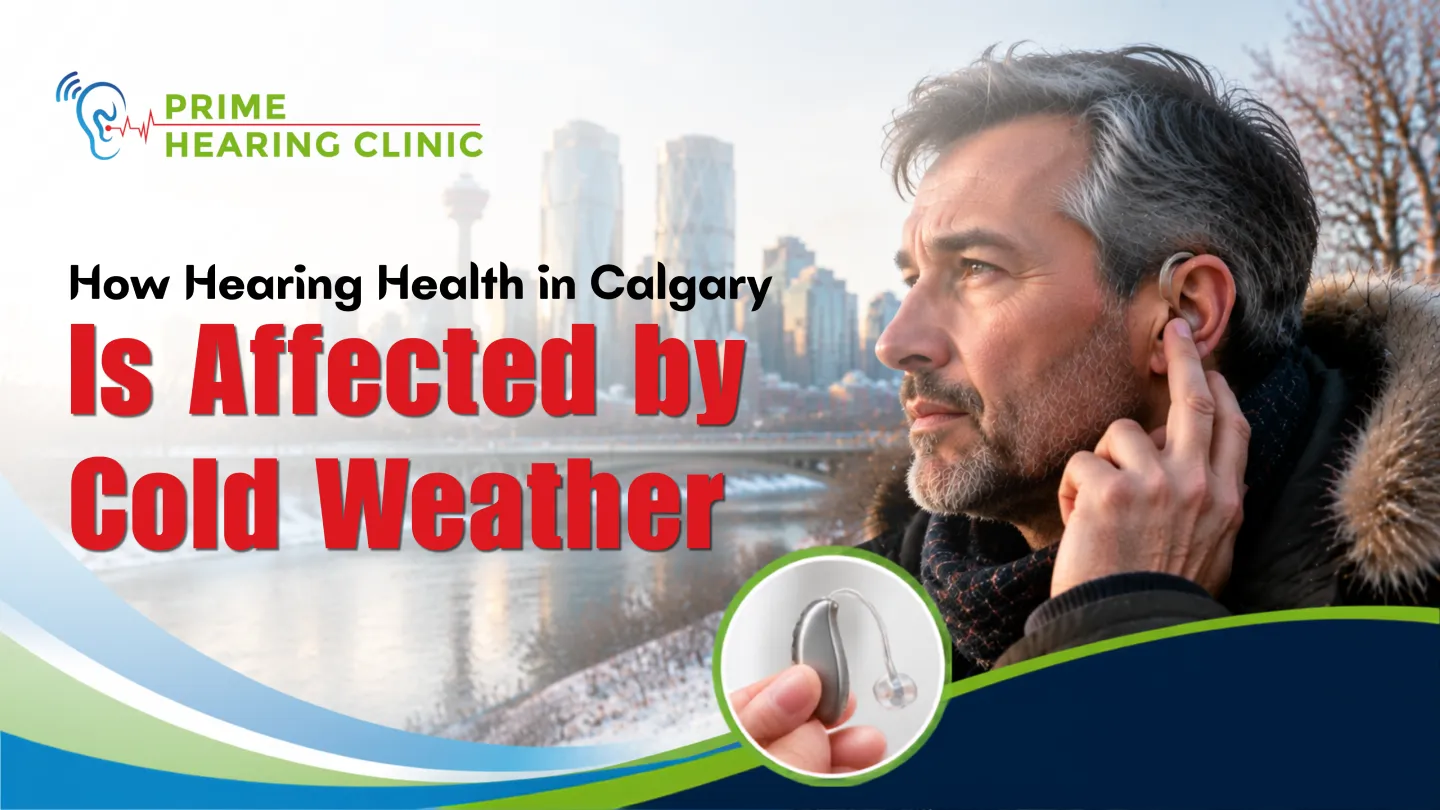
We spend a lot of energy protecting ourselves from winters: thicker coats, warmer boots, moisturizer for wind-burned skin. Our ears rarely make that list. Most people don’t think about their ears at all until they’re aching on the walk from the parkade, or until a cold turns into something that makes the whole world sound like it’s underwater.
Cold weather doesn’t just make your ears cold; it changes how they work, sometimes for a few uncomfortable minutes and sometimes for weeks or months.
In a city that swings between -25°C and +10°C within the same week, Calgary people need to be more attentive to protect their ears. Calgary ears deal with more of this than most. Here’s what’s actually happening to your hearing health in winter when the temperature drops, what’s normal, what’s not, and what you can do about it.
There isn’t one single reason cold weather bothers your ears; it’s a handful of small mechanisms, all happening at once.
None of these are dangerous on their own. But together, they explain why so many people notice their hearing “acting up” specifically in winter.
Short answer: usually temporary, occasionally something more lasting, and it’s worth knowing the difference.
Temporary hearing changes are the most common outcome during the winter, and the main reason behind it is exactly the mechanisms above: reduced blood flow, a stiffened eardrum, or a Eustachian tube that hasn’t caught up with a pressure change. But these kinds of temporary hearing dips are not to be worried about; they return to normal once you return to the warm environment. It’s uncomfortable, but not dangerous.
Hearing loss linked to infection takes longer to resolve. If cold-weather exposure leads to a cold or sinus infection, fluid can build up behind the eardrum and cause hearing to feel muffled for one to two weeks, sometimes longer, until the infection clears.
Permanent hearing loss from cold weather is rare, but there’s one condition worth knowing about: exostosis, sometimes called “surfer’s ear,” even though you don’t need to go anywhere near water to get it. Years of repeated exposure to cold wind can cause new bone growth inside the ear canal, gradually narrowing it. Exostosis doesn’t happen in a day or from a sudden exposure to cold; it results from consistent exposure to a cold environment. It is most common in people who spend a lot of time outdoors in winter without ear protection (think: daily dog walkers, winter cyclists, ski patrol).
Apart from exostosis and temporary hearing problems, there are a handful of other issues that often show up when staying in a cold environment or once the temperature drops:
Ordinary cold discomfort usually goes away within a few minutes or hours once you get back to the normal temperature. If muffled hearing, pain, or pressure lasts more than a day or two, it is best to get a hearing test. Also, if you face these problems every winter, that’s your cue to get it checked out rather than waiting for spring.
Yes, this is actually the most common path to a winter ear infection. When you catch a cold, the swelling in your nasal passages extends to the opening of the Eustachian tube, disrupting its ability to drain properly. Fluid gets trapped behind the eardrum, and that trapped fluid becomes an easy environment for bacteria to grow. That’s how an ear infection from cold symptoms typically develops; the cold air itself rarely causes the infection directly. It’s the cold virus creating the conditions for one.
If you live here, you already know Calgary winters aren’t just cold; they’re unpredictable. A chinook can push the temperature up by 15-20°C in a matter of hours, and just as quickly, it can drop right back down. For most of the body, that’s just an annoying reason to layer clothing you’ll want to take off by lunch. For your ears, it’s a repeated stress test.
Remember that Eustachian tube pressure-balancing act mentioned earlier? Chinooks put it through extra work. Every rapid swing is another moment where your ears have to catch up to a shift in air pressure and temperature, and for people who are already prone to congestion, sinus issues, or ear fullness, that repeated adjustment can mean more frequent discomfort than in a city with steadier winter weather.
This is genuinely a Calgary-specific factor. It’s not something you’ll find in most general “cold weather and hearing” articles, because most of the world doesn’t get chinooks, but if you’ve ever felt your ears pop or ache on one of those warm-snap days in the middle of January, this is likely why.
Most winter ear problems are preventable with a few consistent habits:
If you wear hearing aids, winter brings a few extra things worth watching for:
A drying kit or dehumidifier used overnight goes a long way toward preventing moisture damage, and giving your devices a moment to adjust to temperature changes, rather than going straight from a warm car into a windy parking lot, helps too. If you’re noticing performance issues that don’t seem to resolve once you’re back inside, it’s worth having your devices checked rather than assuming it’s just the season.
Most winter hearing health problems return to normal once your body warms up or you return to a normal temperature. However, there are a few signs that the problem is more than just cold weather, such as:
If any of that sounds familiar, Prime Hearing Calgary offers mobile hearing tests, so you can get checked without adding another stop to an already packed winter schedule. We come to you, assess what’s going on, and help you figure out whether it’s a normal seasonal thing or something that needs a closer look.
Cold weather affects your ears more than you realize. Cold reduces blood flow, pressure, and eardrum flexibility, which can lead to temporary hearing problems. Most of what you’ll experience is temporary and can return to normal in a few hours or days. Sometimes it can lead to persistent infections, tinnitus, and exostosis. If you face these symptoms every winter, we recommend taking it seriously, as these issues are much easier to manage when caught early.
If Calgary winters have been harder on your ears than you’d like, don’t just wait it out until spring. A quick mobile hearing test can tell you whether what you’re dealing with is ordinary cold-weather discomfort or something that deserves proper care.
Yes, cold weather can cause changes in the body, such as reduced blood flow, a stiffened eardrum, and changes in Eustachian tube pressure, which can cause temporary hearing loss. However, there is nothing to worry about, as it usually returns to normal within a few minutes or once your body returns to normal temperature.
Protecting your hearing in winter takes a few routine changes, like covering your ears when you’re outside, treating cold and congestion early, avoiding cotton swabs for earwax removal, and using waterproof earplugs during snow sports or skating.
Some people do notice their tinnitus is more noticeable in cold, dry conditions. If it's new or getting worse, it's worth having your hearing checked to rule out other contributing factors.
Yes. Ears have very little natural insulation, so anyone spending extended time outdoors in freezing temperatures benefits from a hat, earmuffs, or a hood, hearing aids or not.
The most common hearing problems you can have due to cold are ear infections (often following a cold), Eustachian tube dysfunction, tinnitus flare-ups, earwax impaction from dry air, and short-term hearing dips from reduced blood flow or eardrum stiffness.
5 best tips that are a must for winter: cover your ears whenever you go outside for a walk or any other reason, ease into temperature changes rather than rushing between hot and cold, treat colds and congestion early, avoid cotton swabs for wax removal, and use waterproof earplugs during snow sports or skating.
The four best tips to protect your hearing aid in winter are: dry it at night using a dehumidifier or drying kit, keep the batteries warm and dry, let devices adjust gradually to temperature changes, and keep them shielded from wind and moisture outdoors.
Cold temperatures naturally reduce battery efficiency, and it happens with most battery types, not just with hearing aids. The best way to maintain battery efficiency in cold weather is to keep them warm. We also recommend carrying a spare set of batteries.
Most hearing specialists recommend cleaning hearing aids every day on your own to boost their lifespan. We also recommend professional hearing aid cleaning at least once a month in cold weather, especially if you're noticing wax buildup, moisture issues, or unusual battery drain.
Assistive Listening Devices Bluetooth hearing aids Custom earmolds Custom earplugs in Calgary hearing-aid practitioners in Calgary hearing aid clinic in Calgary hearing aid clinics in Calgary hearing aid devices Hearing aid practitioners Hearing aid practitioners in Calgary Hearing Aids hearing aids in Calgary hearing care services in Calgary hearing clinic in Calgary hearing clinics in Calgary hearing health clinic in Calgary Hearing Protection Hearing Screening Hearing Test hearing test in Calgary hearing tests in Calgary Hidden Risk of Cotton Swabs in-clinic hearing test Wireless Hearing Aids wireless hearing devices
We Speak Your Language

Supporting individuals and families across Alberta with better hearing through expert care, advanced technology, and compassionate service, both in-clinic and in-home.
ਸਾਡਾ ਮਿਸ਼ਨ ਹੈ ਕਿ ਹਰ ਕੋਈ ਵਧੀਆ ਢੰਗ ਨਾਲ ਸੁਣ ਸਕੇ—ਕਿਉਂਕਿ ਸੁਣਨਾ ਜ਼ਿੰਦਗੀ ਨਾਲ ਜੁੜਨ ਦਾ ਸਾਧਨ ਹੈ।
Copyright © 2026 Prime Hearing Clinic. All Rights Reserved.
Powered By Cyber Ace
Our booking services are currently available exclusively in Canada. We’re sorry, but bookings from outside Canada are not currently supported.