Our ears are exposed to a range of sounds every day, from quiet background noise to extremely loud sounds. Whether you love blasting your favorite music through headphones, attending crowded concerts, working around heavy machinery, or simply dealing with everyday noise, repeated exposure to loud sounds may slowly increase your risk of hearing loss.
But how loud is too loud for your ears? And when does everyday noise cross the line from harmless to potentially damaging?
Let’s answer these questions precisely and explore what you can do to protect your hearing.
According to the World Health Organization, adults can listen safely to sounds around 80 dB for up to 40 hours per week, while at 100 dB, the recommended safe listening time drops to just 20 minutes per week.
This data is especially important as it helps us understand that hearing damage from loud noise is not just limited to concerts, construction sites, or other loud environments. Something as normal as headphones, power tools, motorcycles, and other everyday activities can expose your ears to high levels of sound.
WHO estimates that more than 1 billion people, aged 12-35, are exposed to a high risk of hearing loss from recreational listening practices.
So, what are considered safe noise levels? Which everyday sounds can contribute to hearing damage from loud noise, and what can you do to protect your ears? Let’s take a closer look.
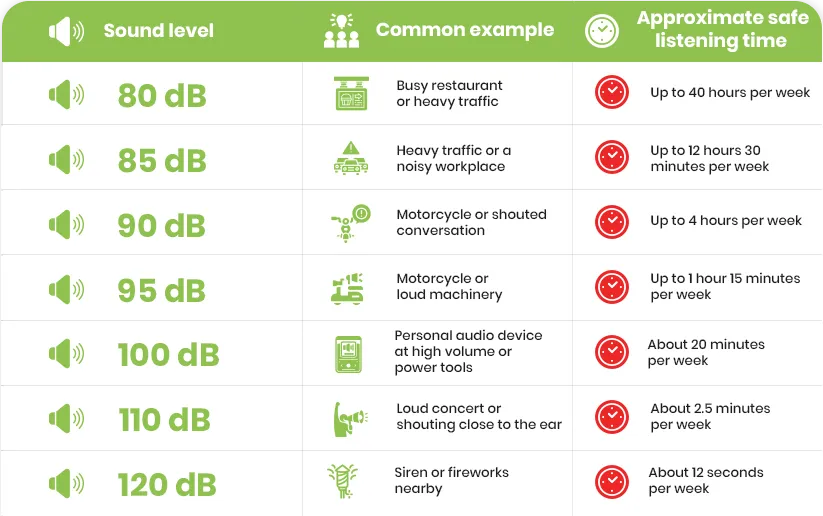
Note: These time limits are based on WHO safe-listening guidance and apply to total weekly exposure. Actual risk can vary depending on the distance from the sound source, the type of noise, and individual factors.
To understand how loud noise can cause hearing loss, it helps to know what happens inside your ear when you hear a sound.
Before sound reaches the Cochlea, it travels through the outer and middle ear. Inside the cochlea are thousands of tiny sensory hair cells that respond to sound vibrations and convert them into electrical signals. These signals are then sent through the auditory nerve to the brain, where they are interpreted as sounds that you normally hear.
The real problem is that these delicate hair cells can get damaged when exposed to excessive noise. The intense vibrations from very loud sound can overstimulate these sensory cells and their connections to the auditory nerve.
Are you experiencing symptoms of hearing loss? The best way to effective treatment is through accurate and professional diagnosis. Visit Prime Hearing Clinic in Calgary and get a hearing test today.
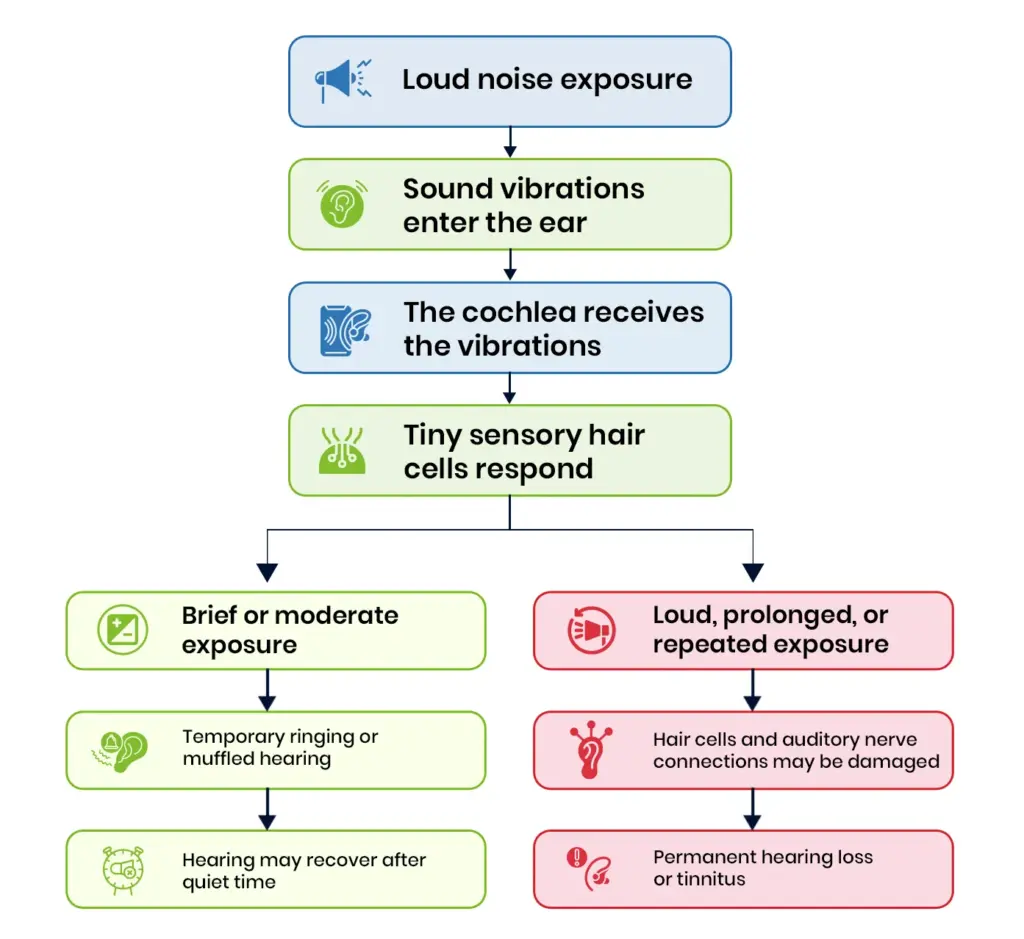
Let us help you understand this with a brief example. After a loud concert, you might notice a ringing sound in your ears or that nearby sounds seem muffled. This can happen because the sensory cells and related structures have been temporarily stressed by the intense sound.
When this exposure happens repeatedly, it can cause permanent damage to the sensory cells. Unlike some cells in the body, the sensory hair cells in the human inner ear do not grow back once they are destroyed.
One of the trickiest things about hearing damage from loud noise is that you may not notice it straight away.
Early changes may show up as:
Over time, these changes may become more noticeable and interfere with everyday communication.
This is why hearing damage from loud noise is often easier to prevent than to reverse. Once the sensory cells in the inner ear are permanently damaged, current medical treatment cannot restore them to their original condition.
It is not just about how loud a sound is. Several factors determine your risk.
The louder the sound is, the greater the risk of hearing loss. Sounds measured at high decibel levels can harm the delicate structures inside the ear, especially when you are exposed to them for extended periods.
How long you listen to a sound matters as much as how loud it is. Even moderately loud sounds can become harmful if you are consistently exposed to them for several hours without giving your ears enough time to recover.
Being near a loud sound source increases the amount of sound reaching your ears. Standing near speakers, machinery, power tools, or other loud equipment can increase your risk, while moving farther away can significantly reduce exposure.
Different frequencies of sound can affect your hearing in different ways. Certain sounds at high frequencies may be uncomfortable or cause damage at high volumes. Regular exposure to sounds in specific frequency ranges can also result in hearing difficulties over time.
Occasional exposure and repeated exposure do not have the same effect. Regularly attending loud events, working around noisy equipment, or listening to music at high volumes can ultimately increase the risk of hearing damage. The intensity increases when proper hearing protection is not used.
If you are consistently exposed to loud sounds or work in an environment where unusually loud noise cannot be avoided, it is worth considering an appointment with a hearing clinic in Calgary. A professional can help assess the damage caused and suggest suitable options to protect your hearing long-term.
Sound is measured in decibels (dB), and the risk to your hearing generally increases as the volume and duration of exposure increase. Everyday sounds at comfortable levels are usually safe for your hearing.
Prolonged exposure to very loud sounds can damage hearing. As a general rule, the louder the sound, the less time you should spend around it.
The risk of hearing loss can be reduced by following a few simple habits:
Custom earmolds in Calgary are a great option when standard earplugs feel uncomfortable, do not properly fit, or fail to provide the protection needed. They are individually made to fit the shape of your ears, making them suitable for people who need hearing protection regularly.
Custom earmolds may be suitable for:
If you regularly experience loud noise, custom hearing protection may be worth discussing with a hearing professional.
The first step to protecting your hearing starts by first understanding how noise affects your ears and what type of protection is suitable for your lifestyle.
At Prime Hearing Clinic, we personalize hearing care to suit each individual’s needs. Professionals at our Calgary hearing clinic provide accurate hearing assessments, discuss your work and daily noise exposure, and recommend practical ways to reduce the risk of noise-related hearing damage.
If your work involves spending a significant amount of time around loud equipment, attending concerts, or riding motorcycles, or if you are simply noticing changes in your hearing abilities, professional guidance can be helpful. Depending on your needs, this may include a hearing test in Calgary, advice on safe noise exposure, or personalized hearing protection such as custom earmolds.
Not every loud sound causes hearing damage. However, long-term exposure to these sounds can increase your risk of hearing loss. It is important to understand the safe levels of noise and limit your exposure as much as possible.
If you are worried about noise exposure or changes in your hearing, a professional hearing test in Calgary can help you understand your current hearing health. At Prime Hearing Clinic, personalized hearing care and guidance can help you take important steps to protect your hearing today and for years to come.
Hearing care can come to you. Prime Hearing Clinic offers mobile hearing testing in Calgary, making it easier to have your hearing assessed in a familiar and comfortable setting. Schedule your mobile hearing test today and take the first step toward understanding and protecting your hearing.
Assistive Listening Devices Bluetooth hearing aids Custom earmolds Custom earplugs in Calgary hearing-aid practitioners in Calgary hearing aid clinic in Calgary hearing aid clinics in Calgary hearing aid devices Hearing aid practitioners Hearing aid practitioners in Calgary Hearing Aids hearing aids in Calgary hearing care services in Calgary hearing clinic in Calgary hearing clinics in Calgary hearing health clinic in Calgary Hearing Protection Hearing Screening Hearing Test hearing test in Calgary hearing tests in Calgary Hidden Risk of Cotton Swabs in-clinic hearing test Wireless Hearing Aids wireless hearing devices
We Speak Your Language

Supporting individuals and families across Alberta with better hearing through expert care, advanced technology, and compassionate service, both in-clinic and in-home.
ਸਾਡਾ ਮਿਸ਼ਨ ਹੈ ਕਿ ਹਰ ਕੋਈ ਵਧੀਆ ਢੰਗ ਨਾਲ ਸੁਣ ਸਕੇ—ਕਿਉਂਕਿ ਸੁਣਨਾ ਜ਼ਿੰਦਗੀ ਨਾਲ ਜੁੜਨ ਦਾ ਸਾਧਨ ਹੈ।
Copyright © 2026 Prime Hearing Clinic. All Rights Reserved.
Powered By Cyber Ace
Our booking services are currently available exclusively in Canada. We’re sorry, but bookings from outside Canada are not currently supported.