How to Keep Your Hearing Aid Clean and Working Properly

How to Keep Your Hearing Aid Clean and Working Properly

Hearing aids can completely change your daily life, and if you wear one, you probably know it’s a blessing that has improved your lifestyle and habits. With hearing devices, conversation feels easier; you no longer have to ask someone to repeat themselves, turn up the TV so loud that even your neighbor can hear it, and more. 

Unfortunately, many people don’t even realize that a hearing device is a small, delicate piece of technology that needs proper maintenance and care. It needs proper cleaning; otherwise, earwax, sweat, and dust can build up slowly and affect the hearing instrument’s functionality.  

The good news is that keeping a hearing aid clean isn’t complicated. It takes a few minutes a day, a couple of basic tools, and knowing what not to do. In this guide, we’ll cover hearing aid cleaning tips and everything you need to know about maintaining your hearing aid, with a few tips specific to living in Calgary.

Daily Hearing Aid Cleaning Routine

Here is a simple daily routine every hearing device user should follow to keep their aid working properly for longer. Anyone can follow this routine, no matter what brand of hearing device you wear. 

  1. Wash and dry your hands: Any oil, lotion, or moisture on your hands can transfer straight onto the device.
  2. Brush off the surface: Use the soft brush that came with your hearing aid (or one from your provider) to clear away visible wax or dust, paying close attention to the microphone and receiver openings.
  3. Wipe with a dry, soft cloth: A microfiber cloth works best. This removes oils and light dirt from the casing without scratching it.
  4. Check the wax filter or dome: If your device uses one, look for buildup and replace it if it looks clogged or worn.
  5. Open the battery door (if applicable): Leaving it open overnight lets any trapped moisture escape and helps the battery last longer.
  6. Store it in a dehumidifier or dry, safe case overnight: This is one of the most useful habits you can build, especially in Calgary (more on that below).

Hearing Aid Cleaning Process: Steps for Different Style Aids

Hearing loss falls into different categories, and not every patient requires the same aids. Each hearing device has its own functionality and requires different cleaning steps: 

Behind-the-ear (BTE): These sit behind your ear with a thin tube or earmold running into your ear canal. Detach the dome or earmold each day (check your manual for how it connects), wipe it separately with a soft cloth, and let it dry fully before putting it back on. Never reattach it while it’s still damp.

In-the-ear (ITE) and in-the-canal (ITC/CIC): These aids are more prone to earwax buildup and breaking because they sit entirely in the ear or in the canal. To clean these aids, hold the device with the speaker facing down while brushing, so any loosened wax falls away from the openings instead of further inside. A wax pick or wire loop can help lift out anything the brush misses, but go gently.

Rechargeable hearing devices: Instead of a battery door, wipe the contact points inside the charging case with a dry cloth. Keep the charger free of dust, and avoid getting the contacts wet.

Battery-powered hearing aids: Along with your daily wipe-down, clean the battery compartment with a dry brush, and store spare batteries somewhere cool and dry (a kitchen or bathroom cabinet, where humidity swings around, isn’t ideal). Check our guide on choosing the right hearing aid batteries in 2026. 

Tools You Should Have for Hearing Aid Cleaning

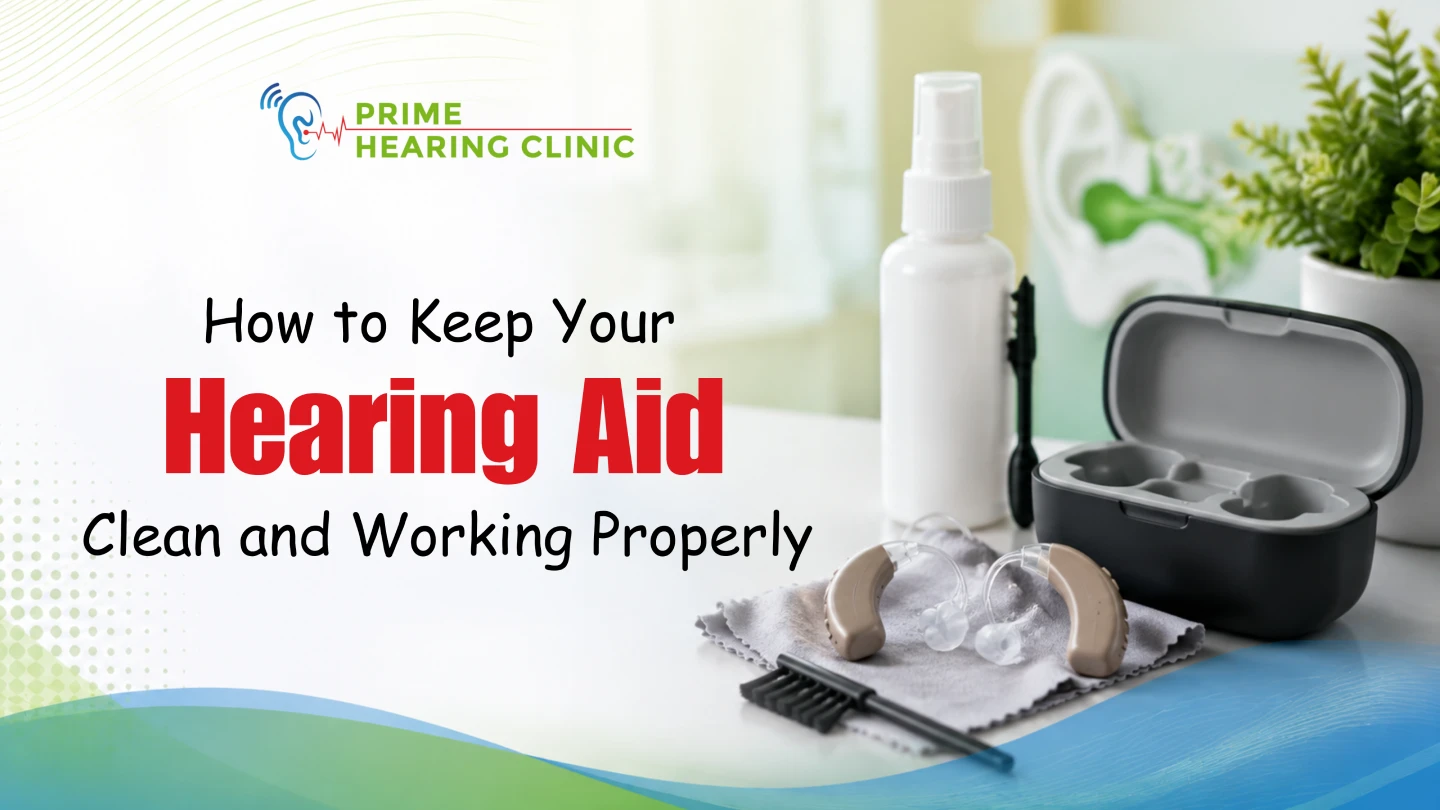
You don’t need much to keep a hearing device in good condition. Most hearing clinics, including ours, will give you a basic cleaning kit when you’re first fitted, and you can pick up replacements easily. Here’s what’s genuinely useful:

  • A soft-bristle brush to clear wax and dust off the surface and out of small openings.
  • A microfiber or lint-free cloth to dry out your hearing aid after using it for the whole day. 
  • A wax pick or wire loop to lift out stubborn wax without pushing it further in.
  • A dehumidifier (electric or a simple drying jar) to remove overnight moisture from your aid before using it again. 
  • Replacement wax filters or domes to swap in on time, or if your existing wax filters or domes aren’t cleaned properly. 

What to avoid:

  • Rubbing alcohol or household cleaning products; these can break down the protective coating on the shell
  • Water, unless you’re specifically rinsing a removable earmold (and even then, dry it fully before reattaching)
  • Cotton swabs pushed into the microphone or receiver ports; they tend to push wax deeper rather than removing it

How Often Should You Clean Your Hearing Device?

Many hearing aid users ask this question, but there is no need to overthink it. A simple rule works for almost everyone and every type:

  • Give your hearing aid a quick wipe-down and brush-off every day before bed. 
  • Take a closer look at the dome, earmold, or wax filter every week to clean it thoroughly. 
  • Have a professional cleaning and checkup with a hearing care provider every 6-12 months. They will clean the parts that you usually cannot reach at home. 

Earwa and moisture don’t just sit on the surface; they creep into the tiny openings of different hearing aid parts, like the microphone and receivers. If you leave them for a few days, they harden, become much harder to remove, and can even cut out the sound completely. This makes daily cleaning more important than many people expect.  

Common Cleaning Mistakes That Damage Hearing Aids

A few habits come up again and again as reasons hearing aids end up needing repair:

  • Cleaning with alcohol wipes or random disinfectant sprays. These common household items are too harsh for the device’s casing and seals.
  • Letting the device get wet, in the shower, at the pool, or even from sweat during exercise. Moisture is a leading cause of internal damage.
  • Skipping the daily wipe-down and only cleaning once buildup becomes visible or the sound changes.
  • Using sharp tools carelessly around the microphone or receiver, which can scratch or puncture delicate parts.
  • Storing hearing aids loose in a pocket or purse instead of a proper case, where dust, lint, and accidental damage are much more likely.

Calgary-Specific Hearing Aid Cleaning Tips

We have met many people in Calgary who follow a daily cleaning routine but still face hearing aid problems. It’s because Calgary’s climate adds a few extra challenges to maintaining their aid, which people in humid cities don’t have to worry about.  

  • Our dry air affects earwax and static: Calgary sits at a fairly high altitude with low humidity for much of the year, which can lead to drier earwax that’s more likely to flake and build up around the device. A daily brush-off matters more here than in a humid climate, where wax tends to stay softer and clear more naturally.
  • Chinooks and big temperature swings cause condensation: One of Calgary’s quirks is how fast the temperature can change; a chinook wind can push the temperature up 15 to 20 degrees in a matter of hours. Moving between a cold outdoor setting and a warm indoor space causes tiny amounts of condensation to form inside the hearing aid, the same way your glasses fog up when you walk into a warm room. Over time, that moisture buildup is exactly what a dehumidifier is meant to counter, which is why using one nightly is especially worthwhile here.
  • Long, dry winters mean more indoor heating: Furnace-heated homes in Calgary dry the air out even further. Keeping a small humidifier running in your bedroom can help, both for your ears and your hearing aid’s internal components.
  • Winter activities need extra care: During winter, if you’re shoveling snow, skiing, or doing any outdoor activities, remove your hearing device if you don’t need it, or at least try to protect it from moisture.  

When Cleaning Isn’t Enough: Signs You Need Professional Hearing Aid Services in Calgary

Daily care goes a long way, but it can’t fully clean the hearing aid and still requires professional care. Below are a few signs that indicate that it’s time to book a professional appointment: 

  • The sound from your hearing aid isn’t clear, even after you’ve cleaned it thoroughly yourself. 
  • You hear a beep, buzz, or whistling sound from your hearing aid.
  • Static, crackling, or intermittent sound
  • The device won’t turn on or keeps cutting out
  • It’s been 6 months or more since your last professional cleaning and check-up.
  • You’re not confident cleaning a specific part yourself; it’s better to leave it to a professional than risk damage.

A professional cleaning goes further than what you can do at home. It typically includes a full inspection of the microphone and receiver, tubing or dome replacement, and a performance check to confirm the device works as it should. If you’re due for one, Prime Hearing Clinic offers trusted hearing aid services in Calgary, including adjustments and repairs your device might need. 

Final Thoughts

Cleaning a hearing aid isn’t complicated, but you have to make it a habit. A few minutes at night before bed is the perfect time to clean it and remove any moisture or blockages. With the right tools and tips, it becomes effortless and will do more for your device’s lifespan than almost anything else. And when home cleaning isn’t enough, or Calgary’s weather has been especially hard on your hearing aid, a professional check-up can catch small issues before they turn into costly repairs.

Frequently Asked Questions

Clean your hearing aid every night before bed, and have a professional cleaning at least once or twice a year. If you produce more earwax than average, your hearing care provider may suggest more frequent professional visits. If you live in Calgary, then use a humidifier to remove moisture during the Chinook season.
No, you should never use alcohol wipes; they can damage the device’s protective coating layer and break down your aid. Always use a dry cloth or a specialized cleaning solution.
No, even water-resistant models are not recommended for showers or rain. If your hearing device gets wet, dry it with a cloth or a humidifier. Some brands also offer electronic drying or disinfecting, as well as drying capsules.
Professional hearing aid cleaning costs $10-$70, depending on your hearing aid warranty, your patient status, and the service you need, such as pickup or delivery to your home.
This is often caused by earwax buildup blocking the sound from reaching your eardrum properly, or by a poor fit. A cleaning usually resolves it, but if it continues, have your provider check the fit.
It's a good idea. Calgary's dry climate and frequent temperature swings from chinooks can cause condensation to build up inside the device. An overnight dehumidifier helps remove that moisture before it causes problems.
The biggest difference is that a hearing aid is worn continuously to amplify sound based on your specific hearing loss. Assistive listening devices, on the other hand, are typically used in specific situations to isolate sound from background noise — think TV listening systems, phone amplifiers, or FM systems used in classrooms and theaters.
It depends on your hearing device and how you use it; most hearing aid batteries can last 15-20 days if you use them for 12 hours a day with proper care.

Tags: