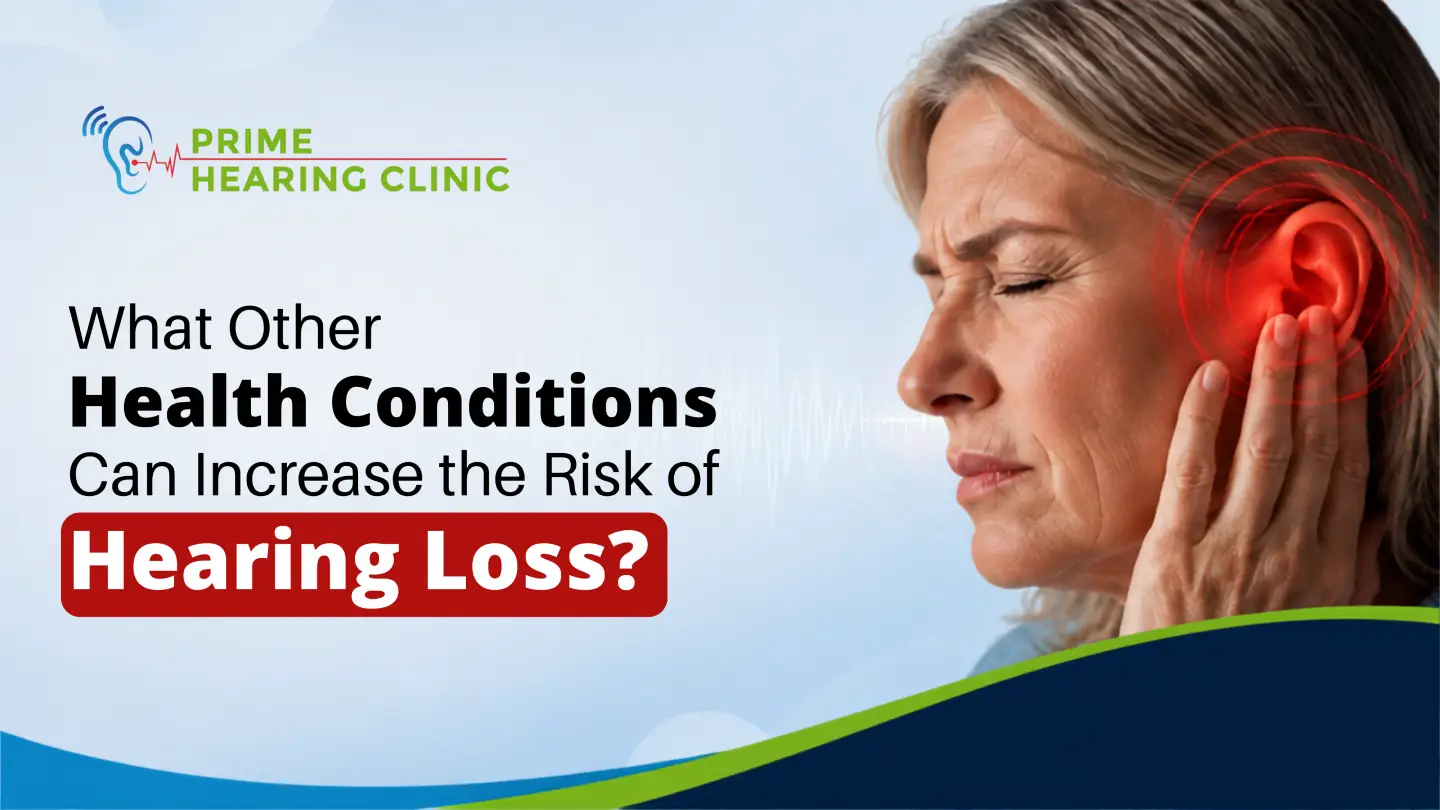
Hearing loss is often associated with aging or long-term exposure to loud noise, but while these are the most common factors, they’re not the only factors that affect your hearing. Certain health conditions, infections, injuries, and medications may also be linked to changes in hearing.
This does not mean that having one of these conditions will automatically lead to hearing loss. It can vary from person to person, and several factors may contribute to hearing changes simultaneously. Knowing what to look out for can help you recognize changes in your hearing and take action when needed.
In this guide, we’ll look at some health conditions that may be linked to hearing loss, the warning signs to watch for, and when a professional hearing test or assistive listening devices may be helpful.
Your ears rely on healthy nerves, good blood flow, and clear signals to the brain to help you hear properly. So when something in the body isn’t working quite right, it can sometimes affect hearing too.
That’s why health conditions can affect hearing in different ways, depending on which part of the hearing system they affect.
Here’s a simple way to think about it:
These effects do not mean that a particular health condition will definitely cause hearing loss. The impact depends on the condition, its severity, and the person’s overall health.
In the following sections, we look at some health conditions and other factors that may be linked with changes in hearing.
Several chronic and acute medical conditions can damage the delicate blood vessels, nerves, and structures of the inner ear, significantly increasing the risk of hearing loss. These conditions are:
Diabetes can affect the small blood vessels and nerves throughout the body, including those that support the delicate structures of the inner ear. Over time, this may make it harder for the ear to function the way it should.
High blood pressure and general cardiovascular health may matter for similar reasons, since good blood flow is important for the inner ear to work properly.
According to StatsCan Plus, hearing health problems are significantly more common among adults with hypertension (79%).
This doesn’t mean diabetes or blood pressure issues will directly cause hearing loss, but they’re worth keeping in mind as part of your overall health picture.
The immune system normally protects the body from illness. With some autoimmune conditions, however, the immune system mistakenly attacks healthy tissue.
In some cases, this activity may affect the inner ear and contribute to hearing changes. Autoimmune-related hearing problems are not common, but they are one reason hearing changes may sometimes occur alongside other health concerns.
If you have an autoimmune condition and notice unexplained changes in your hearing, discussing them with a healthcare professional can help determine whether further evaluation is needed.
Problems affecting the ear itself can also interfere with hearing. Ear infections, inflammation, fluid buildup, or other conditions may temporarily make sounds seem muffled or less clear.
Symptoms such as ear pain, pressure, fluid or discharge from the ear, and changes in hearing should not simply be ignored.
Some ear-related hearing problems may improve once the underlying issue is treated. However, repeated or untreated infections can occasionally contribute to more lasting hearing difficulties, which is why it’s worth having ongoing ear symptoms looked at rather than waiting them out.
A significant head injury can sometimes affect the parts of the auditory system involved in hearing. Depending on the injury, a person may experience hearing changes, ringing in the ears, dizziness, or problems with balance.
If you notice a sudden or unusual change in hearing after a head injury, it is important to have it assessed rather than assuming it will go away on its own.
Some medications are known to potentially affect hearing as a side effect. These are sometimes described as ototoxic medications.
The risk depends on factors such as the medication, dosage, length of treatment, and a person’s overall health.
If you notice changes in your hearing after starting a medication, speak with your healthcare provider. Do not stop a prescribed medication on your own.
Oral health is another area that can affect overall health and hearing. While the relationship is not simple and more research is needed, maintaining good oral health remains an important part of general preventive care.
Hearing changes are often gradual, which can make them easy to miss at first. That is why it is more useful to pay attention to changes in how you hear and communicate rather than assuming that a particular condition will cause hearing loss.
Some common signs to watch for include:
Hearing difficulty can also affect how much effort you need to put into everyday conversations. When you have to concentrate harder to fill in missed words or sounds, listening can become tiring.
For some people, this may lead to mental fatigue, especially after long conversations, meetings, or time spent in noisy environments.
For a closer look at these symptoms, read our guide on 5 Warning Signs You Need Hearing Aids and learn more about the early signs of hearing difficulties.
A professional hearing test can help determine whether changes in your hearing are related to hearing loss or another issue affecting the ear. It can also provide a clearer picture of your hearing health when you have an existing condition that may affect hearing.
You may want to consider an evaluation if:
There are also situations where waiting is not a good idea. Sudden or rapidly worsening hearing loss should be assessed promptly, particularly when it occurs in one ear or comes with symptoms such as dizziness or other unusual changes.
A hearing evaluation can help identify whether hearing loss is present and provide information about its type and degree. This can make it easier to determine whether you simply need to monitor your hearing, address an underlying ear problem, or explore hearing support.
A hearing test is usually a straightforward process designed to understand how well you hear and whether there are any patterns that need further attention.
Here’s how your appointment at a hearing test clinic might go:
The appointment may begin with questions about your hearing, health history, medications, noise exposure, and situations where you have difficulty communicating. This gives the hearing professional a better understanding of your concerns.
Your ears may be examined to look for issues such as blockages or other problems that could affect hearing. This can help distinguish an ear-related problem from other types of hearing difficulty.
You may listen to different tones through headphones and respond when you hear them. Speech testing may also be used to assess how well you understand spoken words.
These tests help identify the softest sounds you can hear across different pitches and provide information about how you process speech.
The results can show whether hearing loss is present and, if so, whether it affects one or both ears and how significant it is.
Depending on what the evaluation shows, the next step may involve monitoring your hearing, addressing an underlying ear problem, seeking medical evaluation, or exploring hearing support.
Even when hearing loss is being actively managed, certain environments can still make communication difficult, whether that’s a crowded restaurant, a busy meeting room, or the television at home. This is where Assistive Listening Devices (ALDs) can offer additional support.
These devices are designed to make certain listening situations easier by helping a person hear important sounds more clearly.
Different devices can be useful in different settings.
Assistive listening devices are not a one-size-fits-all solution. The most suitable option depends on a person’s hearing needs, the environment where they experience difficulty, and the type of technology available.
For some people, they can be a useful part of making everyday communication easier.
Hearing loss does not always have one clear cause. Age, noise exposure, health conditions, infections, injuries, and certain medications may all play a role, depending on the individual.
But having one of these conditions doesn’t mean hearing loss is inevitable.
Paying attention to changes in your hearing and getting professional evaluation when needed can help you identify problems early and determine what kind of support may be appropriate.
If you’re noticing any of the signs above, our team at Prime Hearing Clinic in Calgary is available to help you understand where your hearing stands and what our options are.
Yes, you can live a normal life with moderate hearing loss. Many people continue to work, socialize, and enjoy their usual activities. However, communication may require some adjustments, especially in noisy environments.
Many medical conditions and health issues have been associated with hearing problems, including diabetes, high blood pressure, cardiovascular conditions, some autoimmune conditions, and certain infections. Head trauma and some medications may also affect hearing.
However, these conditions do not automatically cause hearing loss, and the hearing effect might depend on the individual.
Yes, hearing loss can make you feel very mentally tired. This is called listening fatigue. When you have trouble hearing, you may need to concentrate more closely on conversations and use context to fill in sounds or words you missed.
This extra listening effort can leave some people feeling mentally tired, particularly after long conversations or time spent in noisy environments.
Hearing loss does not necessarily cause a general concentration problem, but difficulty hearing can make communication require more mental effort.
When you are constantly trying to work out missed words or sounds, it may become harder to focus on the conversation itself. Addressing hearing difficulties may make communication less demanding.
Assistive Listening Devices Bluetooth hearing aids Custom earmolds Custom earplugs in Calgary hearing-aid practitioners in Calgary hearing aid clinic in Calgary hearing aid clinics in Calgary hearing aid devices Hearing aid practitioners Hearing aid practitioners in Calgary Hearing Aids hearing aids in Calgary hearing care services in Calgary hearing clinic in Calgary hearing clinics in Calgary hearing health clinic in Calgary Hearing Protection Hearing Screening Hearing Test hearing test in Calgary hearing tests in Calgary Hidden Risk of Cotton Swabs in-clinic hearing test Wireless Hearing Aids wireless hearing devices
We Speak Your Language

Supporting individuals and families across Alberta with better hearing through expert care, advanced technology, and compassionate service, both in-clinic and in-home.
ਸਾਡਾ ਮਿਸ਼ਨ ਹੈ ਕਿ ਹਰ ਕੋਈ ਵਧੀਆ ਢੰਗ ਨਾਲ ਸੁਣ ਸਕੇ—ਕਿਉਂਕਿ ਸੁਣਨਾ ਜ਼ਿੰਦਗੀ ਨਾਲ ਜੁੜਨ ਦਾ ਸਾਧਨ ਹੈ।
Copyright © 2026 Prime Hearing Clinic. All Rights Reserved.
Powered By Cyber Ace
Our booking services are currently available exclusively in Canada. We’re sorry, but bookings from outside Canada are not currently supported.