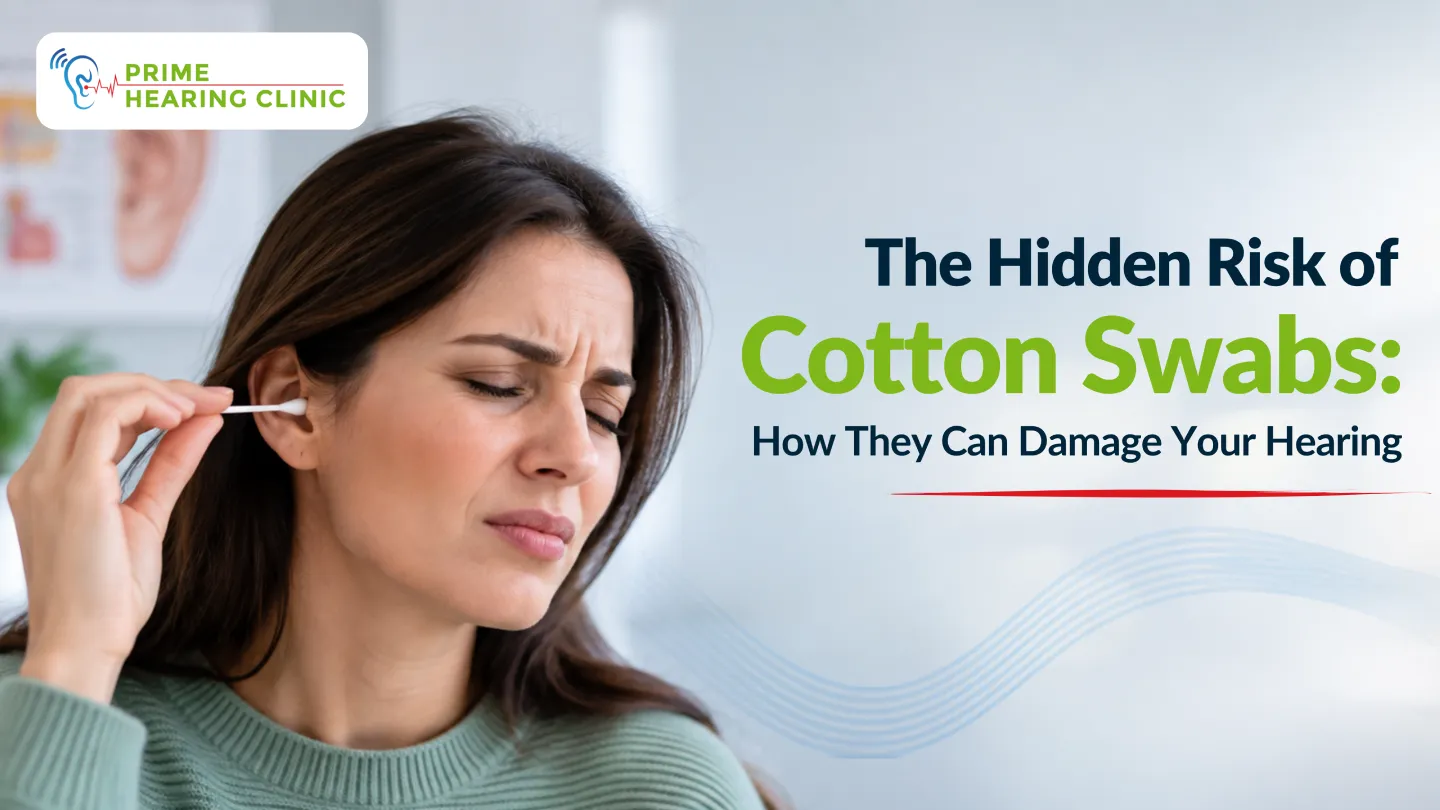
Almost everyone does it. You come out of a shower, reach for a cotton swab, and give your ear a quick clean. It feels satisfying, hygienic, and safe.
But it isn’t safe.
Cotton swabs are one of the most common causes of preventable ear injury and hearing loss in North America. Still, many people who use cotton swabs daily don’t realize this and are harming their hearing health unknowingly.
Inserting cotton swabs in the ear can cause more problems than it solves. Your ears are delicate, and using cotton swabs regularly can cause long-term hearing and ear health issues. There are several other safe ear cleaning methods to remove earwax without any hearing health risks.
In today’s blog, we’ll explore the risks of cotton swabs and learn safer alternatives that protect ear health while cleaning ears more effectively.
Many people believe the myth that earwax is dirt. No, it’s not. It is a substance your ear produces on purpose to keep your ear canal moisturized, so it doesn’t dry out and feel irritated. Also, earwax keeps your ear canal safe from debris and has natural antibacterial and antifungal properties.
In most people, the ear canal is self-cleaning. Wax naturally migrates outward over time with our jaw movement during eating, talking, and chewing.
Now you might be wondering: if it has so many benefits, then why is cleaning your ear important?
For most people, cleaning earwax means cleaning it from the outer ear and ear opening, not the canal itself. All they want is to wipe away visible earwax, keep the outer ear clean and dry, and clean the wax that doesn’t come off on its own. Cleaning your ear becomes more important when the wax starts blocking sound and causing hearing problems.
Unfortunately, you may think a cotton swab is a safe ear cleaning method, but it is not.
There’s a local wrinkle to this that’s easy to overlook. Calgary’s climate – long, dry winters, low humidity, and frequent Chinook winds tends to dry out skin generally, including the delicate skin inside the ear canal. Dry skin is itchy skin.
This means if you live in Calgary and reach for a cotton swab, that’s often not because of excess earwax; more likely, your ear feels itchy and dry because of the weather. Unfortunately, swabbing makes your ear drier and the itching worse, not better. It becomes a cycle: the itch prompts the swabbing, and the swabbing causes more itch.
So if your ear feels itchy during Calgary’s winter season, it’s likely because of the dryness, and a cotton swab is not the right tool for this. You can use a specialized ear-safe moisturizer or mineral oil. We have covered this in more depth in our How Hearing Health in Calgary is affected by the cold weather blog.
Yes, in some cases, a cotton swab can cause permanent hearing loss. Usually, when you use a cotton swab, you might use it at the wrong angle or too fast, which pushes the earwax deeper instead of taking it out. All this can perforate the eardrum or, in more severe cases, damage the tiny bones of the middle ear that transmit sound, causing hearing loss.
Besides this, a cotton swab can leave cotton fibers behind in your ear canal. A sudden movement, a startled reaction, or someone bumping your arm while the swab is in place can also turn a routine cleaning habit into a serious injury.
There are several ways a cotton swab can damage your hearing or cause an infection in your ears.
There are several safe alternatives to remove earwax without cotton swabs: let your ear do it, use a damp cloth, use earwax removal drops, and use a bulb syringe. Here is how these safe alternatives clean your ear:
If none of these methods clear the blockage within a few days, or you’re not confident doing these methods at home, a hearing test clinic in Calgary can do it safely and quickly for you.
Protecting your hearing doesn’t take much effort; it just means replacing a few habits with better ones. Keep these in mind:
Cotton swabs feel hygienic and safe, but they are not, and a single mistake can risk lasting hearing damage. The itch you think is relieved is often caused by cotton swabs, and the wax you think is getting out is being packed tighter.
For earwax cleanup, the best approach is to leave it alone and let your ear do its job naturally, or use safe ear cleaning methods like ear irrigation or ear drops for wax cleaning.
If you are experiencing muffled sounds or pain in your ear, it’s better to visit a professional and check for any infection or hearing issues.
No, even many brands that sell cotton swabs also recommend not putting them in the ear canal. If you feel you need to clean the ear canal, it is better to visit a professional.
The only reliable way to know is to have it checked. A quick otoscopic exam can usually tell within minutes, and if wax isn't the cause, a hearing test at a qualified hearing test clinic can identify what is.
Assistive Listening Devices Bluetooth hearing aids Custom earmolds Custom earplugs in Calgary hearing-aid practitioners in Calgary hearing aid clinic in Calgary hearing aid clinics in Calgary hearing aid devices Hearing aid practitioners Hearing aid practitioners in Calgary Hearing Aids hearing aids in Calgary hearing care services in Calgary hearing clinic in Calgary hearing clinics in Calgary hearing health clinic in Calgary Hearing Protection Hearing Screening Hearing Test hearing test in Calgary hearing tests in Calgary Hidden Risk of Cotton Swabs in-clinic hearing test Sudden Hearing Loss Wireless Hearing Aids wireless hearing devices
We Speak Your Language

Supporting individuals and families across Alberta with better hearing through expert care, advanced technology, and compassionate service, both in-clinic and in-home.
ਸਾਡਾ ਮਿਸ਼ਨ ਹੈ ਕਿ ਹਰ ਕੋਈ ਵਧੀਆ ਢੰਗ ਨਾਲ ਸੁਣ ਸਕੇ—ਕਿਉਂਕਿ ਸੁਣਨਾ ਜ਼ਿੰਦਗੀ ਨਾਲ ਜੁੜਨ ਦਾ ਸਾਧਨ ਹੈ।
Copyright © 2026 Prime Hearing Clinic. All Rights Reserved.
Powered By Cyber Ace
Our booking services are currently available exclusively in Canada. We’re sorry, but bookings from outside Canada are not currently supported.