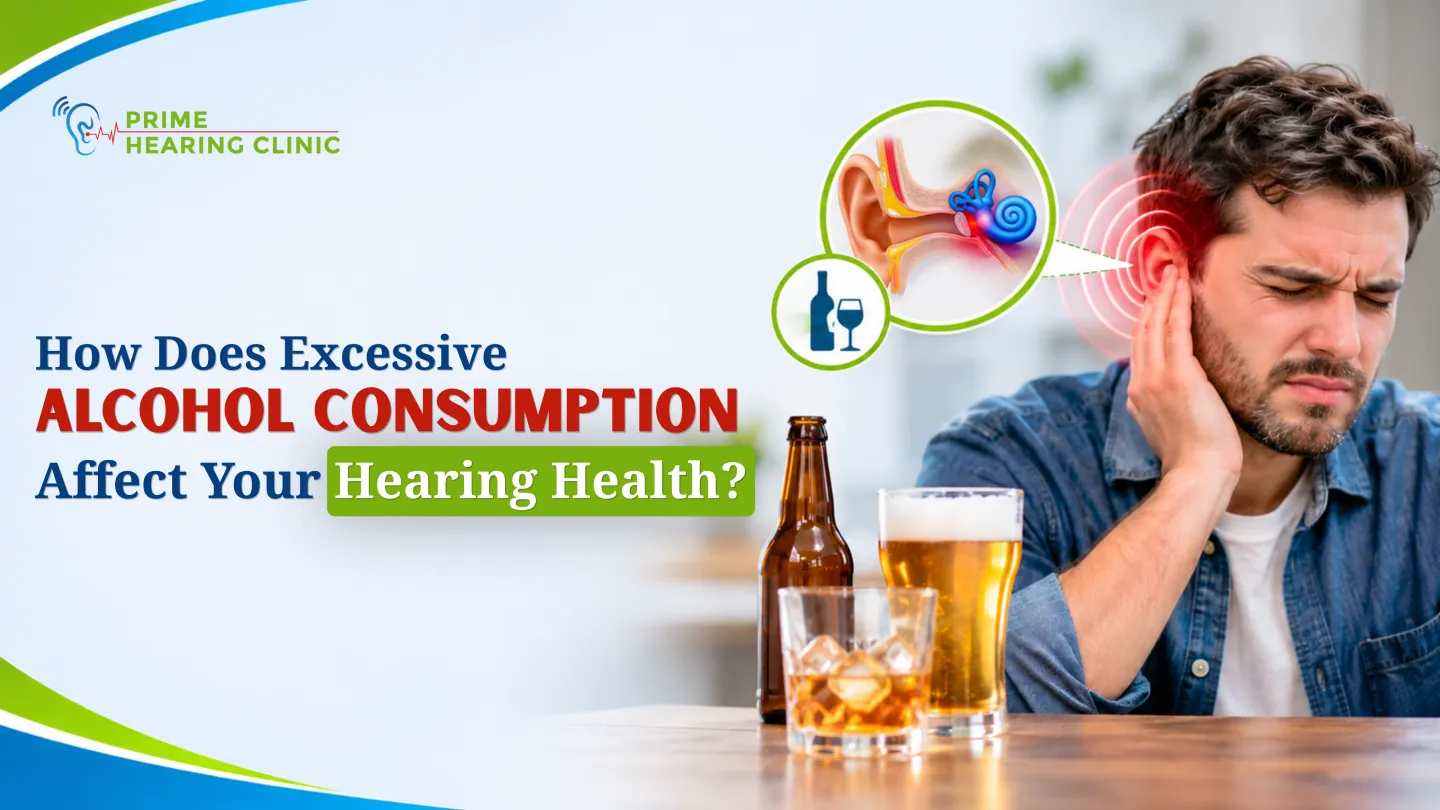
Most people know that excessive alcohol consumption can harm the liver, affect the heart and interfere with brain function. However, its effects aren’t limited to these areas; alcohol can also affect your hearing.
Alcohol can influence how the brain processes sound, make conversations harder to follow and contribute to temporary changes in hearing. Understanding these effects can help you recognize potential hearing problems and know when to seek professional advice.
In this blog, we’ll explain the effects of alcohol on hearing and when a professional hearing assessment may be necessary.
Alcohol affects the central nervous system, which controls how your brain processes information and coordinates different body functions. This can influence how you respond to sounds, understand speech and maintain balance.
Here are five ways excessive alcohol consumption can affect your hearing and related functions:
After drinking alcohol, you may notice that some sounds seem quieter than usual or that you need people to speak louder to understand them.
Alcohol can temporarily affect hearing sensitivity, changing the way you respond to certain sound frequencies. These changes may also make it harder to recognize speech, particularly in a noisy environment.
In some cases, hearing sensitivity returns to normal as the effects of alcohol wear off. However, if sounds continue to seem quieter or less clear after you are sober, it is worth getting your hearing checked.
Drinking often takes place in restaurants, bars, nightclubs, and concerts, where music and background noise can be loud.
Alcohol can affect your judgement, making it easier to overlook how loud your surroundings have become. You might also spend longer in a noisy environment without realising how much sound exposure you are getting.
Prolonged exposure to loud noise can damage the sensory hair cells in your inner ear. These cells help convert sound vibrations into signals that your brain can understand.
Unlike some other cells in the body, damaged inner-ear hair cells do not naturally grow back. Significant damage can result in permanent hearing loss. This is one reason to pay attention to noise exposure when drinking or attending social events.
Tinnitus is the perception of sound when there is no external source. It can sound like ringing, buzzing, humming or hissing in one or both ears.
Some people notice that their tinnitus becomes more noticeable after drinking alcohol. Others do not experience any difference. Alcohol can also affect sleep and blood pressure, which may influence how noticeable tinnitus feels.
If you regularly experience ringing in your ears, do not automatically assume alcohol is responsible. Tinnitus can have several causes, including noise exposure, hearing loss and certain ear conditions. Persistent or recurring tinnitus is a good reason to seek professional advice.
Hearing someone speak and understanding what they say are two different things. Your ears detect sound, while your brain processes speech and helps you recognise individual words.
Alcohol slows activity in the central nervous system. This can make it harder to process spoken information quickly and separate different voices. You may notice this when:
This difficulty is sometimes called cocktail deafness. It describes trouble following conversations in noisy social settings after drinking. It does not necessarily mean you have permanent hearing loss.
Your inner ear contains the vestibular system, which helps your brain understand your head’s position and movement. It works with information from your eyes and muscles to maintain balance.
Alcohol affects the brain and nervous system, which can interfere with coordination and balance. This is why drinking too much can make you feel dizzy, unsteady or as though the room is spinning. You may also notice difficulty walking in a straight line or maintaining your balance.
These effects are commonly associated with intoxication. However, recurring dizziness when you are sober should not be dismissed as an alcohol-related problem. It may indicate an underlying balance or medical condition that needs attention.
Drinking too much alcohol over a long period may increase the risk of hearing loss. Alcohol can temporarily affect hearing sensitivity and speech understanding, but these changes do not automatically mean permanent damage has occurred.
Long-term heavy drinking may also affect the nervous system and overall health. However, it would be inaccurate to assume that everyone who drinks heavily will develop permanent hearing loss. It is also important to consider other factors that can affect your hearing, including:
If you notice that your hearing remains muffled or sounds less clear after drinking, arrange a professional hearing assessment rather than assuming alcohol is the only cause.
Hearing changes can be gradual, which makes them easy to overlook. You might initially notice difficulty following conversations or find yourself turning up the television more often. Some hearing loss symptoms worth paying attention to include:
These symptoms can have different causes and do not necessarily indicate alcohol-related hearing damage.
If you notice recurring changes, a hearing assessment can help determine whether your hearing has changed and whether you need further care.
Reducing alcohol consumption and protecting your ears from loud noise are practical steps towards better hearing health.
It’s important to protect your ears from other factors that can affect hearing, particularly longer exposure to loud noise. Here are five ways to reduce avoidable risks:
Canada’s Guidance on Alcohol and Health recommends drinking less to reduce health risks. They also advise people who drink to avoid consuming more than two standard drinks on any occasion.
Pay attention to how much alcohol you drink and how often you drink. Regular heavy drinking carries several health risks, and reducing your intake can help lower your overall exposure. Reducing your alcohol intake is one of the simplest ways to lower your exposure to alcohol-related health risks.
You can read the Canadian alcohol consumption guidelines for more information. These are general health recommendations, not specific limits that guarantee protection against hearing loss.
Bars, nightclubs, concerts, and parties can expose your ears to loud music for extended periods. To protect your hearing, do the following:
If you work in a noisy environment, use appropriate hearing protection throughout your shift. Reducing noise exposure matters because repeated exposure to loud sounds can permanently damage the hair cells in your inner ear.
If you spend several hours in a noisy environment, take regular breaks somewhere quieter. This reduces how long you’re exposed to loud sounds.
Remember that simply leaving a noisy venue after drinking does not reverse any hearing damage that may have occurred. The aim is to reduce unnecessary noise exposure in the first place.
Do not dismiss recurring ringing, muffled hearing or difficulty following conversations as a normal part of drinking.
Notice whether these changes disappear after the effects of alcohol wear off. If they continue or keep returning, speak with a hearing care professional.
If you have concerns about your hearing, a professional assessment can help identify changes that may not be obvious during everyday conversations.
A hearing assessment can measure how well you hear different frequencies and sound levels. Depending on your concerns, additional speech testing or other assessments may also be appropriate. If you’re looking for a hearing test clinic in Calgary, you can contact Prime Hearing Clinic to get your hearing checked.
Early attention can make it easier to understand your hearing needs and explore suitable solutions.
Occasional difficulty hearing after drinking may be temporary. However, don’t ignore hearing changes that recur or persist. Consider arranging a hearing assessment if you:
Sudden hearing loss is different. If your hearing drops suddenly in one or both ears, seek urgent medical attention. Do not wait for a routine hearing appointment or assume that the problem will resolve on its own.
Important: Sudden hearing loss requires urgent medical attention. If your hearing suddenly drops in one or both ears, seek urgent medical attention. Do not wait for a routine hearing appointment or assume the problem is related to alcohol.
You can also read our guide on sudden hearing loss and why it is an emergency to understand the warning signs and why prompt medical attention matters.
Alcohol can affect more than your coordination and judgement. It can also change how you respond to sounds, follow conversations, and maintain balance while intoxicated.
The important thing is to recognize when a temporary change becomes an ongoing concern. Paying attention to changes in how you hear, limiting exposure to loud noise and avoiding excessive drinking can help you make better choices for your hearing health.
If you have noticed muffled hearing, ringing in your ears or trouble following conversations, a hearing assessment can help you understand what is happening. At Prime Hearing Clinic in Calgary, you can book a hearing test to check your hearing and discuss any concerns with a hearing care professional.
Alcohol Consumption Affect Assistive Listening Devices Bluetooth hearing aids communication tips for seniors with hearing loss Custom earmolds Custom earplugs in Calgary hearing-aid practitioners in Calgary hearing aid clinic in Calgary hearing aid clinics in Calgary hearing aid devices Hearing aid practitioners Hearing aid practitioners in Calgary Hearing Aids hearing aids in Calgary hearing care services in Calgary hearing clinic in Calgary hearing clinics in Calgary hearing health clinic in Calgary Hearing Protection Hearing Screening Hearing Test hearing test in Calgary hearing tests in Calgary Hidden Risk of Cotton Swabs in-clinic hearing test Sudden Hearing Loss Wireless Hearing Aids wireless hearing devices Workplace Hearing Safety
We Speak Your Language

Supporting individuals and families across Alberta with better hearing through expert care, advanced technology, and compassionate service, both in-clinic and in-home.
ਸਾਡਾ ਮਿਸ਼ਨ ਹੈ ਕਿ ਹਰ ਕੋਈ ਵਧੀਆ ਢੰਗ ਨਾਲ ਸੁਣ ਸਕੇ—ਕਿਉਂਕਿ ਸੁਣਨਾ ਜ਼ਿੰਦਗੀ ਨਾਲ ਜੁੜਨ ਦਾ ਸਾਧਨ ਹੈ।
Copyright © 2026 Prime Hearing Clinic. All Rights Reserved.
Powered By Cyber Ace
Our booking services are currently available exclusively in Canada. We’re sorry, but bookings from outside Canada are not currently supported.